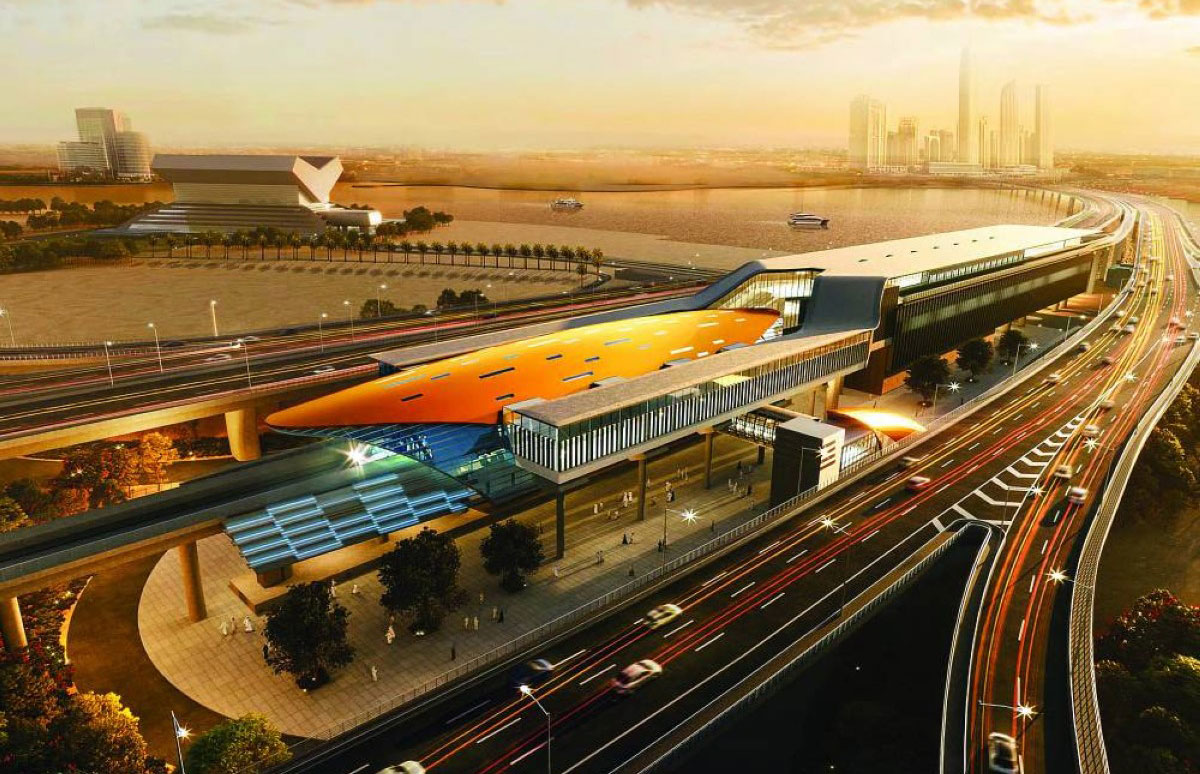
Dubai’s real estate market is entering a new phase with the approval of the Dubai Metro Gold Line, a project that is already drawing the attention of developers and investors to the areas located along its planned route.
The project is not being viewed simply as another transport expansion. For many in the property sector, it represents a major infrastructure move that could influence land acquisition, project planning, pricing strategies, and long-term demand in several growing communities across the emirate.
His Highness Sheikh Mohammed bin Rashid Al Maktoum, Vice President and Prime Minister of the UAE and Ruler of Dubai, may God protect him, approved the Dubai Metro Gold Line last Wednesday. The project is described as the largest sustainable transport project in the emirate’s history, with an estimated investment of around AED 34 billion. His Highness also directed the immediate start of implementation, with the line scheduled to open on September 9, 2032, and with an implementation period 30% shorter than that of the Dubai Metro Blue Line.
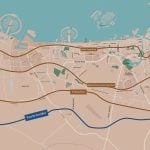
The Gold Line will extend for 42 kilometres and include 18 stations. Its route will connect several important areas, starting from Al Ghubaiba and passing through Mina Rashid, City Walk, Business Bay, Mohammed bin Rashid City, Nad Al Sheba, Sheikh Mohammed bin Rashid Gardens, Meydan, Al Barsha South, and Jumeirah Village Circle, before reaching Jumeirah Golf Estates.
Industry experts believe the new line will help reshape mobility across Dubai, especially as it will connect with the Red and Green lines, in addition to its integration with Etihad Rail at key points. This wider connectivity is expected to add value to communities along the route, both for residents seeking easier daily travel and for investors looking for locations with steady future demand.
Metro Access Becomes a Key Real Estate Factor
Over the past years, proximity to Dubai Metro stations has become an increasingly important factor in real estate performance. Buyers and tenants are no longer looking only at the property itself; they are also considering how easily they can reach workplaces, leisure destinations, and essential services.
With the Gold Line now approved, planning around future stations is expected to become even more important. Developers are likely to focus more closely on land near the planned route or improve their existing projects in areas that will benefit from direct metro access.
Real estate estimates suggest that properties located near metro stations have historically achieved price premiums of around 20% to 30%, with further growth often seen as infrastructure projects move closer to completion. This makes land near future Gold Line stations especially attractive for developers seeking long-term value.
Key Areas Likely to Benefit
Several areas are expected to gain additional appeal from the Gold Line, including Jumeirah Village Circle, Meydan, Mohammed bin Rashid City, Business Bay, and Al Barsha South. These districts already have strong fundamentals, but direct integration into a wider transport network could give them a stronger position in the market.
Better connectivity between residential communities, business districts, and lifestyle destinations may also make these areas more attractive to different groups of buyers and tenants. Professionals working in central districts, families looking for well-connected communities, and investors seeking rental demand could all find added value in locations close to the new metro route.
Stronger Competition Among Developers
The Gold Line is also expected to increase competition for land near future stations. However, location alone will not be enough to secure buyer interest. Today’s market is more selective, with buyers comparing design, build quality, amenities, accessibility, and pricing before making a decision.
As a result, developers may need to offer more balanced and practical projects that combine transport access with strong community facilities and competitive pricing. While land close to the metro may become more expensive, the higher cost could be supported by stronger demand, faster sales, and more stable occupancy rates over time.
A Long-Term Impact on Dubai’s Property Market
The Dubai Metro Gold Line supports the emirate’s wider move toward sustainable, well-connected urban communities. As mobility improves, more areas can become attractive for both residents and investors, helping to spread demand across the city rather than concentrating it only in established central districts.
The project also gives developers a clearer view of future growth. Investment decisions are increasingly based not only on how an area looks today, but on how it will be connected five or ten years from now.
The Dubai Metro Gold Line is set to become an important driver of real estate activity in the coming years. It is expected to strengthen the value of transport-linked locations, support demand for integrated communities, and create new opportunities for developers and investors, while keeping quality and end-user needs at the centre of the market.


Leave a Reply