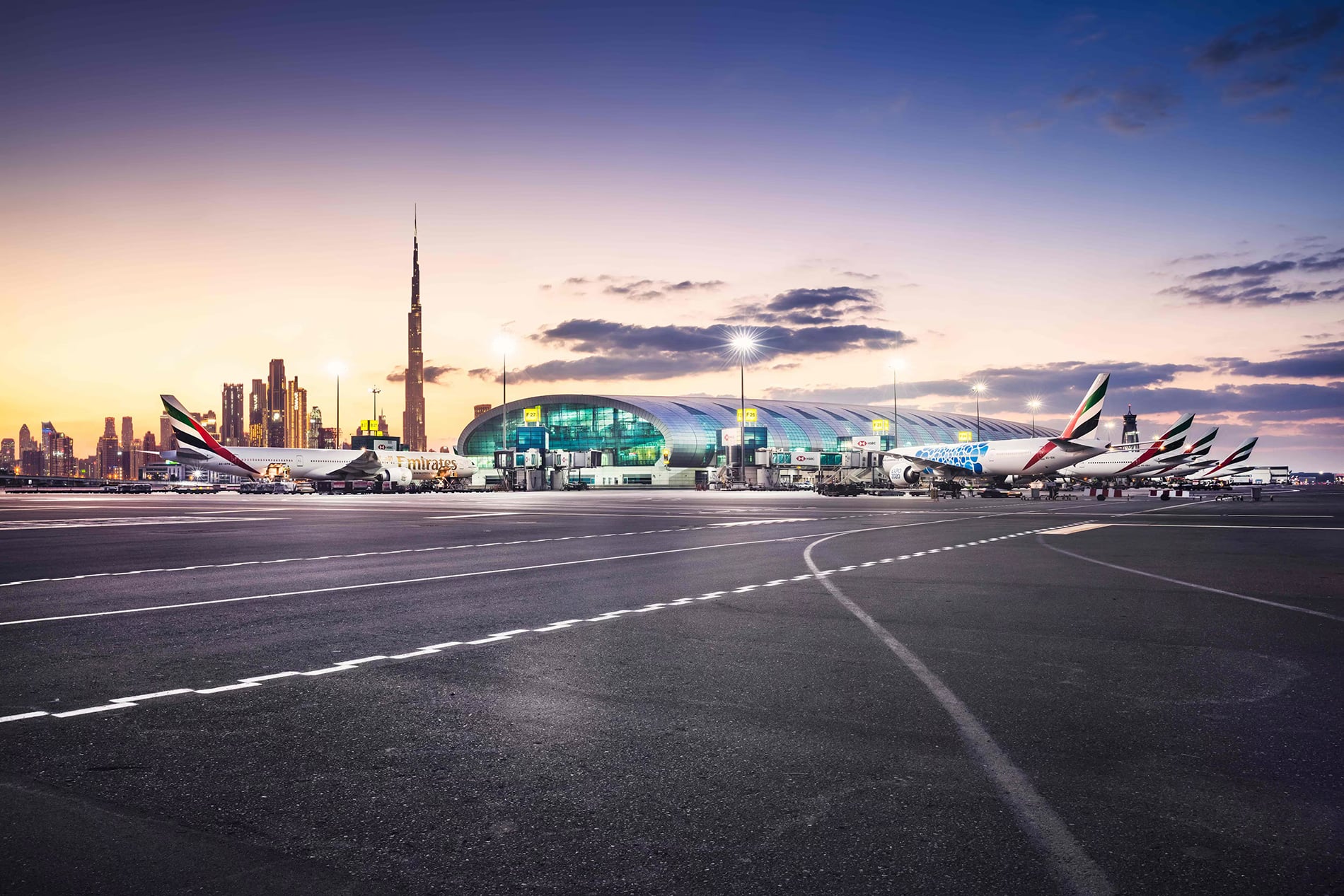
Dubai International Airport has once again secured its place at the top of global aviation, holding on to its title as the world’s busiest airport for international passenger traffic in 2025. The latest figures confirm not only another year of growth for the airport, but also the continued strength of Dubai as one of the most important travel hubs in the world.
According to the annual report released by Airports Council International, Dubai International welcomed 95.2 million international passengers last year, marking a 3.1% increase compared with 2024. That total also made 2025 the busiest year in the airport’s history, underlining the sustained momentum of international travel through Dubai.
The report highlighted the airport’s strong performance against pre-pandemic levels as well. Passenger traffic at Dubai International was up 10.2% compared with 2019, showing that the airport has not only recovered from the disruption of the Covid-19 period, but moved well beyond it.
In the global ranking of airports by international passenger numbers, Dubai International remained comfortably ahead of its competitors. London Heathrow came in second with 79.8 million passengers, leaving a gap of around 15.5 million travelers between the two airports. South Korea’s Incheon Airport followed in third place with 73.5 million passengers, while Singapore Changi ranked fourth with 69.4 million and Amsterdam Schiphol took fifth with 67.8 million.
When both domestic and international travelers are counted together, Atlanta’s Hartsfield-Jackson International Airport remained the busiest in the world, recording 106 million passengers in 2025. Dubai International placed second globally in that broader category and continued to narrow the gap, supported by its own 3.1% growth while the US airport posted a 1.6% decline. Tokyo ranked third with 91.6 million passengers, followed by Dallas Fort Worth and Shanghai with 85.6 million and 84.9 million, respectively.
The latest ranking reinforces Dubai International’s role as far more than just a busy airport. It has become a central gateway linking major markets across East and West, serving tourism, trade, business travel and global connectivity on a massive scale. Its continued rise reflects both Dubai’s strategic location and the airport’s ability to manage growing demand efficiently.
Commenting on the report, Airports Council International World Director General Justin Erbacci congratulated the world’s busiest airports for handling rising demand for air travel amid increasingly complex operating conditions. He noted that these major hubs keep people and goods moving while supporting tourism, global trade and economic growth in their regions. He also stressed the need for governments to prioritize sustainable investment in airports and the wider aviation ecosystem to meet future demand.
On the international front, Airports Council International estimated that global international passenger traffic reached around 4 billion travelers in 2025. That represents a 5.9% increase over 2024 and an 8.3% rise compared with 2019. The organization said the world’s top 10 airports for international traffic accounted for roughly 17% of that global total, with Dubai International maintaining its position at the very top.
Dubai’s leadership in this category also carries historical significance. The airport first overtook London Heathrow in 2014 to become the world’s number one airport for international passengers, ending Heathrow’s long-standing dominance in the category. Since then, Dubai International has managed to hold that lead year after year, reinforcing its status as a permanent fixture at the center of global air travel.
The report also estimated total global passenger traffic, including both domestic and international travel, at 9.8 billion in 2025. That was up 3.6% from 2024 and 7.3% higher than 2019. Airports Council International added that the 10 busiest airports worldwide accounted for about 9% of all passenger traffic, with four US airports making the top 10 thanks to the strength of the domestic travel market there, where local passengers make up between 80% and 95% of total traffic.
With another record year behind it, Dubai International Airport continues to strengthen its position as the world’s leading international aviation hub. Its ability to attract growing passenger volumes, maintain operational efficiency and outperform many of its global peers points to a future in which Dubai remains at the heart of international air travel.





Leave a Reply