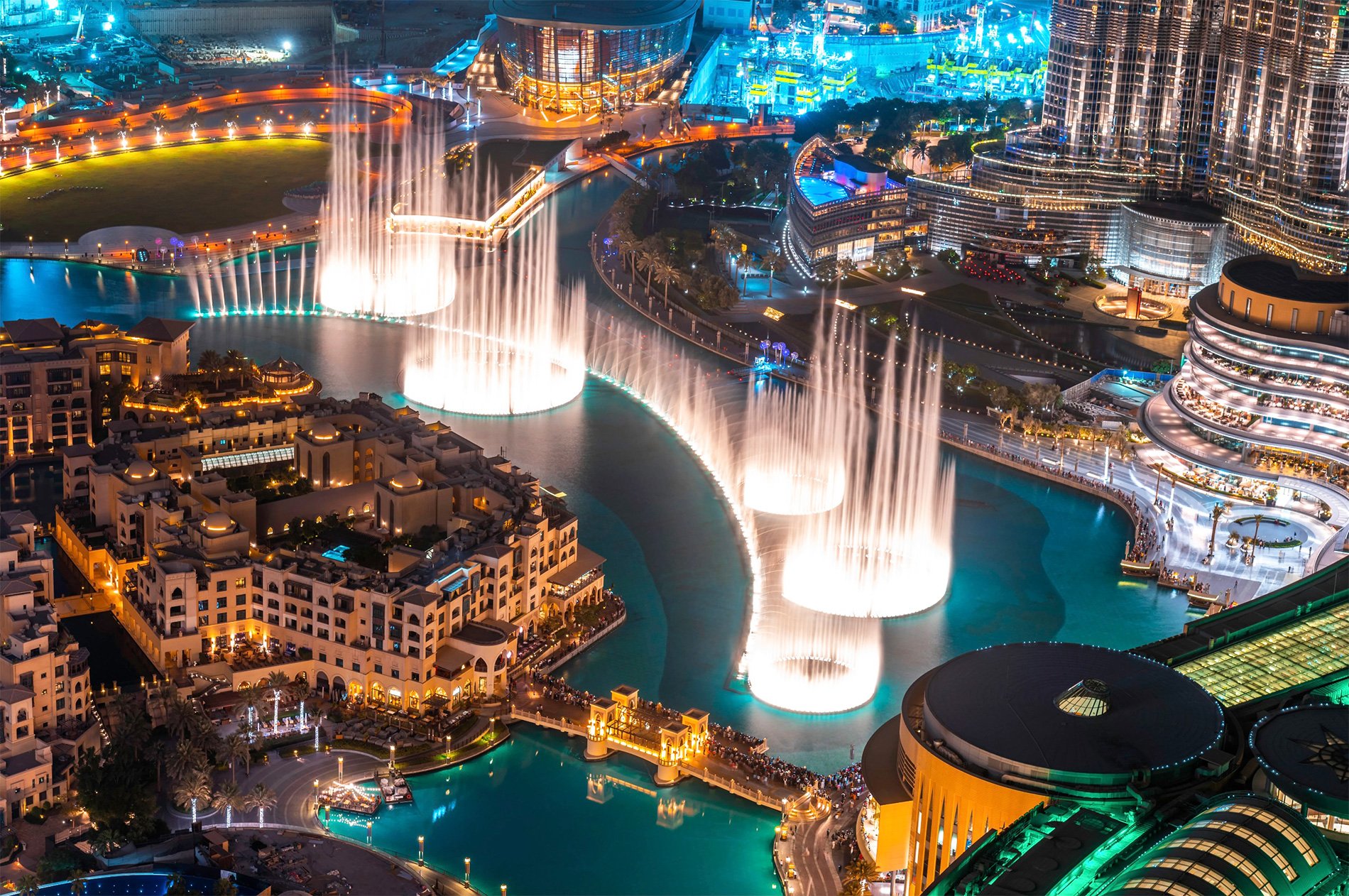
In a region often marked by volatility, Dubai promotes itself as an oasis of stability and prosperity. It consistently ranks among the top countries globally in economic stability and investor appeal. Local leaders highlight Dubai’s robust GDP growth forecasts and healthy fiscal balances, for example, analysts now expect UAE growth around 4-5% per year in 2025, to project confidence. They also emphasize business friendly reforms and infrastructure investments as evidence that Dubai offers a predictable environment. This cultivated image of economic and political security forms the basis of Dubai’s global marketing strategy, reassuring foreign businesses and expatriates that the city will remain a reliable “safe haven” for their investments and lifestyles.
Economic Growth and Diversification
Dubai’s economy is deliberately diversified beyond oil to underpin that stability. The emirate has developed tourism, logistics, finance, manufacturing and tech sectors, and such breadth sustains healthy growth forecasts. International agencies project UAE GDP growth of roughly 4-4.5% annually through 2025–2028, driven by strong non-oil activity and higher oil output. This momentum is backed by prudent fiscal policy: the UAE enjoys large sovereign assets (over 170% of GDP) and persistent budget surpluses, providing a buffer against external shocks. Dubai further markets its zero-income tax regime and world class free zones, where companies can be 100% foreign owned, as a competitive edge. By highlighting low manufacturing costs, minimal bureaucracy and regulatory transparency, officials underscore that Dubai’s environment is engineered to minimize investor risk. Together, these factors contribute to the narrative that Dubai’s economy is not only growing but also stable and predictable, boosting global investor confidence.
Governance, Safety and Business Climate
Politically, Dubai benefits from the UAE’s stable leadership structure and rule of law. Long standing governance under the emirate’s royal family, coupled with low corruption, makes Dubai one of the safest large cities in the world. The government often cites independent surveys to validate this: in late 2024, the UAE was ranked #1 globally for “economic stability” in a U.S. News & World Report study, with top scores for low bureaucracy and high transparency. In practice, Dubai has instituted legal and regulatory reforms (such as full foreign ownership in many sectors and 10 year “Golden Visas” for investors) to send a signal of openness. Combined with investments in security, healthcare and education, these measures reinforce Dubai’s image as a secure, orderly place for business and family life. In marketing materials and speeches, Emirati officials routinely attribute the city’s rise to these consistent policies, arguing that such governance creates the “predictable framework” that wealth seekers and corporations desire.
Infrastructure, Urban Planning and Quality of Life
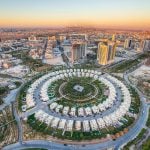
Dubai’s commitment to long term planning also serves its stability branding. Massive infrastructure networks, from an expanded metro and highways to one of the world’s busiest airports, are cited as proof of the government’s forward looking vision. The Dubai 2040 Urban Master Plan exemplifies this, with targets for 100% more parks and 25% more schools to accommodate a projected population jump, and a strategy to decentralize growth into five well defined urban centers. Legacy sites are repurposed for the future: the former Expo 2020 campus, for example, is being redeveloped into “Expo City Dubai”, a mixed use innovation hub, that will anchor new residential and commercial districts. By balancing real estate development with abundant green space and social amenities, Dubai aims to show that it can grow without social or infrastructural strain. In its marketing literature, the city highlights these plans as evidence that “even as we add millions of people, we will not sacrifice quality of life,” underlining the link between careful city design and sustained confidence.
Global Branding and Competitive Edge
Dubai actively contrasts its model with other global cities. It positions itself alongside, and often above, established hubs on key measures. Brand surveys now rank Dubai among the top five city brands worldwide, and the highest in the Middle East, with respondents praising its “strong and stable economy” and future growth potential. Wealth migration studies note that Dubai has become a top destination for high net worth individuals, often outranking older financial centers: one report found Dubai surpassed New York, Singapore and Hong Kong as the preferred hotspot for global millionaires. Factors like zero personal tax, liberal residency rules and an abundance of high-end real estate are central to its appeal. In promotional campaigns and expos, Dubai also emphasizes its cultural diversity and lifestyle (from world class malls to safe walking streets) to differentiate from peers. By telling a consistent story of “business convenience + family safety,” Dubai’s government leverages every new achievement (such as hosting COP28 or launching a green hydrogen plant) as proof points of a stable, future ready city.
Dubai’s sense of stability is a multi-pronged construct. It rests on continued economic growth outside the oil sector, sound public finances and business friendly regulations. It is supported by a security oriented governance model that yields low crime and corruption. It is reinforced by ambitious urban and infrastructure projects that promise to meet future needs. And it is amplified by savvy branding, for example, global rankings of stability and city reputation that repeatedly put Dubai in the company of, or even above, established Western and Asian cities. All of this is communicated to the world through state media, investment roadshows and international events, ensuring that Dubai’s image as a stable, progressive gateway remains firmly etched in the minds of global investors and the public.

Leave a Reply