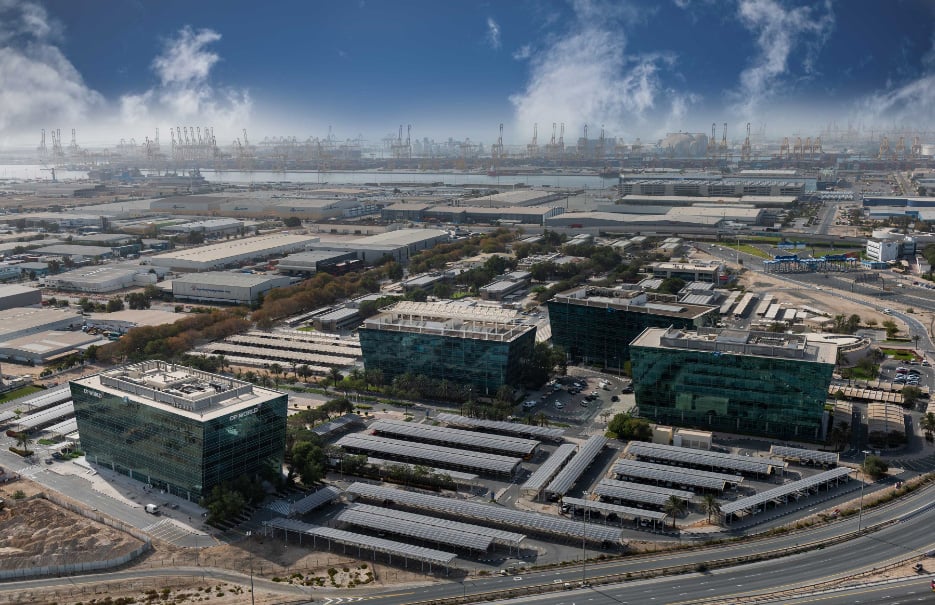
Chinese businesses are rapidly increasing their presence in Dubai, especially in the Jebel Ali Free Zone (JAFZA), one of the region’s leading economic zones. As of November 2025, the number of Chinese companies operating in JAFZA reached 507—almost double the number from 2021.
This growth reflects Dubai’s strong position as a global hub for logistics, trade, and regional expansion.
JAFZA: A Key Hub for Global Trade
JAFZA, operated by DP World, is home to nearly 12,000 companies from around the world. Thanks to its world-class infrastructure and location, it has become a preferred base for Chinese companies looking to reach new markets in the Middle East, Africa, and Europe.
According to Abdulla Al Hashmi, Chief Operating Officer of Parks and Zones at DP World – GCC, Dubai supports modern supply chains by offering excellent logistics services and direct access to global trade routes.
“Dubai connects production, storage, and shipping in one place. This helps companies move faster and reach more customers,” said Al Hashmi.
JD.com Expands Its Operations in Dubai
One of the largest Chinese e-commerce companies, JD.com, has built a strong presence in JAFZA. It operates five logistics centers in the zone and uses Dubai as its main base for the region.
In 2025, the company’s real estate arm, Jingdong Property, acquired two new logistics facilities covering 110,000 square meters.
“The Middle East is a key part of our global network,” said Feng Guo, JD.com’s Regional CEO. “We plan to keep expanding in Dubai to serve our 8 million business customers around the world.”
Serving the Middle East and Africa
CNBM Emirates, part of China National Building Material Group, has been operating in JAFZA since 2010. The company uses Dubai’s free zone facilities to serve clients across the Middle East and Africa and to connect with suppliers and buyers.
The region’s growing demand and strong logistics make Dubai an ideal location for Chinese manufacturers and exporters.
Automotive Companies Choose Dubai
Chinese carmakers like Legend Motors and Lifan are also using Dubai as a center for assembling and exporting vehicles. From here, they reach over 80 international markets.
Jebel Ali Port, one of the world’s busiest ports, is directly connected to more than 180 shipping lines and 150 ports. It handles about 15.5 million containers every year, helping businesses ship their products quickly and efficiently.
Trade Between China and the Gulf Is Growing
Trade between China and the Gulf countries reached $257 billion in 2024, according to Asia House. This number is expected to grow to $375 billion by 2028, as more companies expand their operations in the region.
This growth supports Dubai’s vision of becoming a leading trade and logistics hub connecting Asia, the Middle East, and Africa.
“Dubai brings together manufacturing, investment, and logistics, making it easier for companies to produce, store, and ship in one place,” said Al Hashmi.
Building the Future of Trade
As more Chinese companies choose Dubai, new opportunities are emerging in sectors like digital trade, renewable energy, and advanced logistics.
Dubai continues to invest in infrastructure, technology, and business services, making it a top choice for global companies looking to grow in the region.
Dubai’s world-class free zones, strategic location, and advanced logistics are attracting more Chinese companies every year. From e-commerce to manufacturing and automotive, Dubai offers everything businesses need to grow and reach new markets across the globe.

Leave a Reply