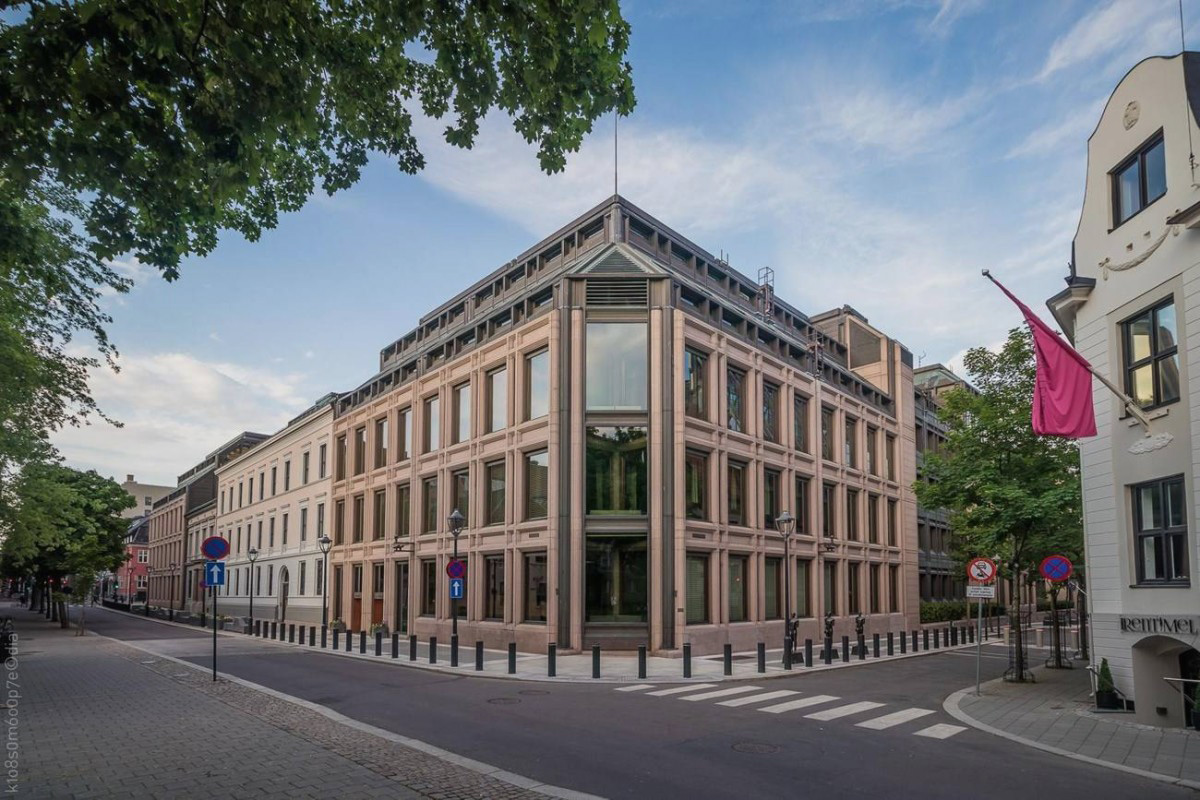
Norway’s sovereign wealth fund has recorded strong growth in its investments in shares of UAE companies over the past 11 years, with the value of those investments rising more than 12-fold between 2015 and 2025. The increase highlights the growing presence of UAE-listed companies in the portfolios of major global institutional investors.
The value of the fund’s investments increased from about $286 million in 2015 to approximately $3.44 billion by the end of 2025, representing growth of more than 1,103%.
Financial analysts said the increase reflects the attractiveness of the UAE’s economic environment and the strength of its listed companies, in addition to high standards of governance, economic stability, and low sovereign risk. These factors play a key role in the investment decisions of major global funds with long-term strategies.
They also noted that key sectors, particularly banking, telecommunications, and real estate, benefit from strong fundamentals and stable business models, strengthening the prospects for continued institutional inflows into the UAE’s financial markets.
Analysts expect investment momentum to remain strong over the medium and long term, with the possibility of more global investment funds entering UAE markets during 2026, which could support liquidity levels and deepen the market.
Fund Investments
Norway’s sovereign wealth fund recorded a significant expansion in its UAE equity investments over 11 years, with their value rising from about $286 million, equivalent to AED 1.049 billion, in 2015 to around $3.44 billion, or AED 12.63 billion, by the end of 2025.
This means the fund’s investments increased by more than 1,103% during the period, alongside a broader expansion in the number of UAE companies in which it holds stakes.
The number of UAE companies in which the Norwegian fund invests rose from 18 in 2015 to 46 by the end of 2025, supported by strong economic growth, the continued development and deepening of local financial markets, and a flexible investment environment that has helped attract foreign capital to the country.
Economic Environment
Wadah Al Taha, a member of the National Advisory Council at the Chartered Institute for Securities & Investment, said, “Norway’s sovereign wealth fund is the largest in the world in terms of assets, with holdings exceeding $1.4 trillion.”
Al Taha added, “The fund relies on a precise and rigorous investment selection system based on high-level financial and governance standards. It also adopts a clear ethical investment approach by staying away from unethical sectors, particularly industries linked to the arms trade and certain controversial activities, reflecting the nature of its long-term strategy based on sustainability and governance.”
Al Taha said, “The most important factor attracting major institutional investments to UAE markets is the strong stability of the economic environment, which leads to a significant decline in sovereign risk.”
He explained that this lower level of risk places the UAE closer to investment-grade markets compared with emerging markets, which directly contributes to higher stock valuations and increases their appeal to global investors.
Al Taha said, “UAE markets are characterized by a high degree of discipline and regulatory oversight, in addition to the sustainability of profits generated by listed companies, which strengthens the confidence of global investment funds,” noting that this trend toward the UAE market remains on a gradual upward path and is expected to continue in the coming years.
He pointed to growing confidence among global institutions that UAE markets include solid, high-quality companies, particularly in the banking, telecommunications, and real estate sectors, which benefit from strong fundamentals and stable business models.
Al Taha also explained that the Norwegian fund is not alone in this trend, as major global investment firms such as BlackRock and Vanguard also invest in UAE markets and hold stakes in a number of major UAE companies, helping strengthen market depth and international investor confidence.
He added that the growing institutional presence in the UAE market is expected to continue in the coming period, with new investors likely to enter in 2026, potentially boosting liquidity and increasing the market’s attractiveness.
Strong Performance
Shadi Batayneh, Head of Trading at Sharjah Islamic Financial Services, said, “The entry of Norway’s sovereign wealth fund into the UAE market is driven by a number of fundamental factors, foremost among them the strong financial performance of listed companies, in addition to the rapid growth of the real estate sector, which is one of the country’s main economic drivers.”
Batayneh explained, “The UAE is now classified among the world’s most attractive economies for capital and wealthy individuals, reinforcing its position as a leading global investment destination.”
He added, “Another key attraction is valuation levels in UAE markets, where price-to-earnings ratios on the Dubai Financial Market range between 10 and 11 times, while they range between 19 and 20 times on the Abu Dhabi Securities Exchange. These levels are considered attractive compared with many other global markets, encouraging investment institutions to inject more liquidity.”
He noted that UAE companies benefit from two main advantages: strong financial results and consistent cash dividend distributions, making them among the most attractive companies for both institutional and individual investors.
Batayneh said that the current investment momentum is expected to continue over the medium and long term, with the possibility of additional global investment funds entering the market during 2026, which would directly contribute to higher liquidity and greater market depth.
He pointed out that the sectors expected to benefit most from this trend are real estate and banking, as they are among the largest recipients of investment inflows, alongside the aviation sector, which remains a vital part of the UAE economy.
He added that continued global investment inflows, together with the UAE’s ability to attract wealthy individuals and international companies, further strengthen its position as a regional and global hub for trade, aviation, tourism, and logistics.
Batayneh stressed that the combination of these factors — including high liquidity, strong corporate results, and foreign investment inflows — could help move UAE markets toward developed-market status in the coming period rather than remaining classified as emerging markets.
A Calculated Signal of Confidence
In the same context, Mahmoud Atta, CEO of Al Saq Securities Trading, said, “The multiplication of the Norwegian sovereign fund’s investments in UAE equities, at a time when global economic divisions are intensifying and the balance of financial influence is being reshaped, cannot be viewed merely as a numerical adjustment within a massive investment portfolio. Rather, it should be seen as a calculated signal of confidence reflecting a structural shift in the attractiveness of the UAE market.”
Atta pointed to the growing maturity of the UAE market, noting that “the past 10 years have witnessed a clear transition from a market dependent on trading activity and regional influences to a more developed, deeper, and more transparent institutional investment environment.”
He added that viewing the Norwegian fund’s entry simply as an investment in relatively low valuations compared with other emerging markets would be an oversimplification, explaining that “major sovereign funds operate according to complex models that include multiple factors, foremost among them political stability, the currency’s peg to the U.S. dollar, strong cash distributions, and the sustainability of earnings in leading sectors.”
Atta also noted that the UAE has succeeded in establishing a balanced economic model that combines growth and stability at a time when some major economies are facing pressures related to debt, slowing growth, or fluctuations in monetary policy. This has given the UAE market particular appeal among long-term investors seeking relative security alongside stable returns.




Leave a Reply