Global trade is shifting. South–South commerce has expanded significantly, rising from around 8% of global trade in 1995 to approximately 25% today, as trade corridors increasingly reorient toward Asia, Africa, and Latin America. Exports between Asia and North America, as well as Asia and Europe, now exceed historic transatlantic flows, while emerging corridors—such as Africa–Asia and Latin America–Africa—are growing rapidly.
In this multipolar environment, the UAE’s role has broadened. Trade between Dubai and China rose by roughly 28% to reach US$119 billion in 2024, now rivaling—and in some years exceeding—Dubai’s trade volumes with Western partners, estimated at around US$110 billion. This shift reflects the Gulf’s growing engagement with Asia and the wider Global South. UAE leaders increasingly describe the country as a vital link between East and West, leveraging its geographic position, neutrality, and connectivity.
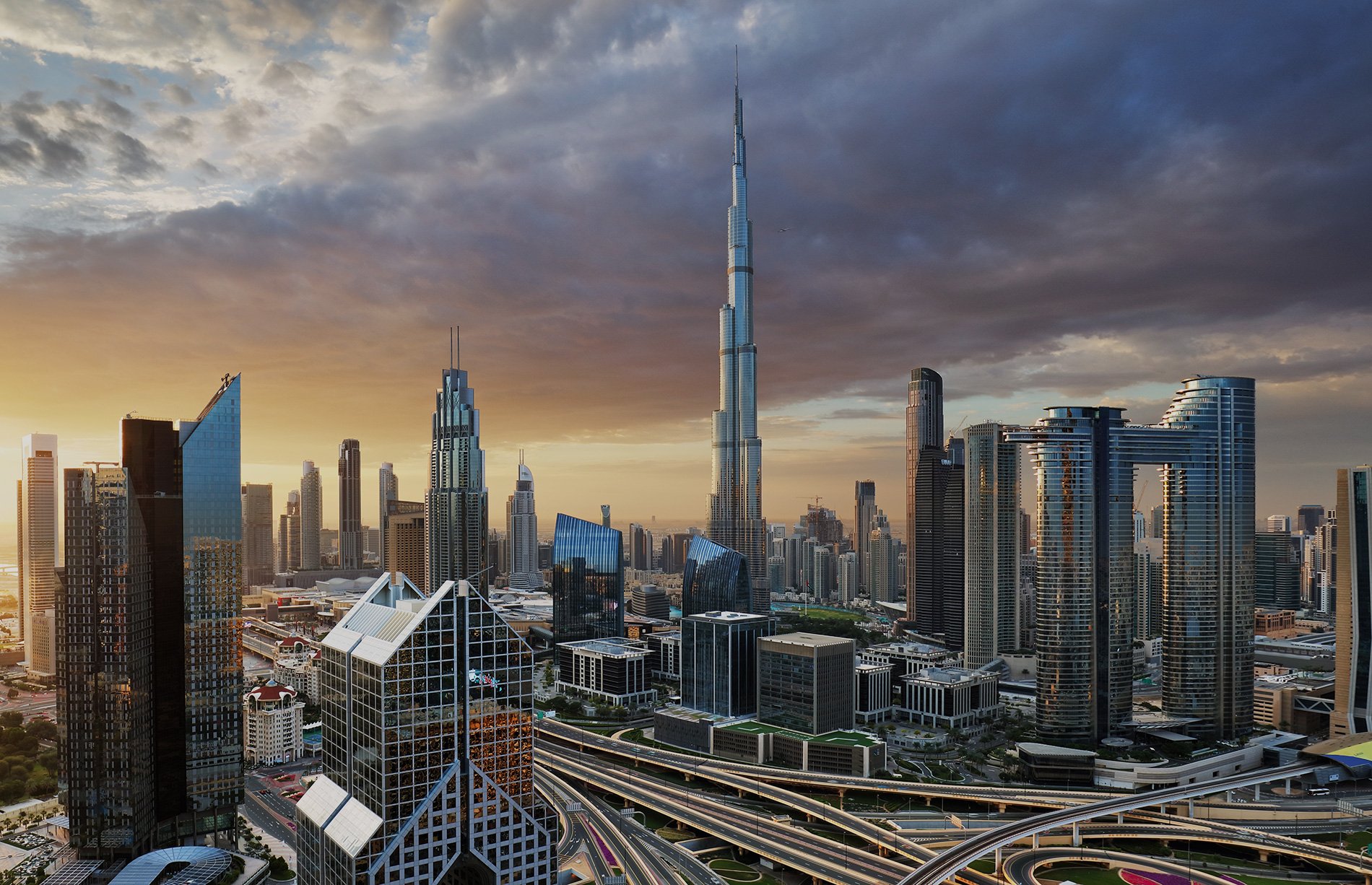
Strategic geography and world-class infrastructure underpin this role. Located within an eight-hour flight of nearly two-thirds of the world’s population, the UAE functions as a neutral corridor for goods moving between Asia, Africa, Europe, and the CIS region. Its ports and airports connect three continents through integrated logistics networks.
Jebel Ali Port illustrates this capacity. In 2023, it handled a record 14.5 million TEU, a year-on-year increase of 3.7%, returning the port to the ranks of the world’s busiest container hubs. With connections to hundreds of ports globally, Jebel Ali’s transshipment capacity supports large volumes of Asian exports bound for Europe and Africa, and vice versa. These facilities anchor the UAE’s broader trade ecosystem, which today includes more than 40 specialized free zones offering 100% foreign ownership and digitally integrated customs systems. Automation, bonded warehousing, and duty-suspension mechanisms for re-exports help minimize friction across jurisdictions.
This infrastructure supports a substantial re-export business. More than 70% of goods imported into Dubai are re-exported onward. Traders can import cargo duty-free into a UAE free zone, store or assemble it, and then re-ship it to markets in Africa, Asia, or Europe under favorable customs regimes. The Jebel Ali Free Zone alone hosts over 10,500 companies operating bonded warehouses, reinforcing Dubai’s role as a global distribution platform linking southern producers with northern markets. This approach aligns with the UAE’s stated objective of doubling non-oil foreign trade by 2031.
The UAE has also developed into a major commodity trading center and an increasingly important pricing hub. Dubai’s gold market highlights this shift. In 2023, the UAE surpassed the United Kingdom to become the world’s second-largest gold trading hub, with more than US$129 billion in bullion and derivatives traded, a 36% increase from the previous year. Analysts increasingly point to Dubai’s centrality in emerging precious metals supply chains shaped by demand from Asia and other Global South economies, with platforms such as the Dubai Gold & Commodities Exchange and DMCC contributing to regional price discovery.
A similar pattern is evident in energy markets. Dubai hosts the Dubai Mercantile Exchange, where Oman crude futures have become a widely used benchmark for Middle Eastern oil sold into Asia. In 2023, record trading volumes further reinforced the DME Oman contract as a key reference point for Asian refiners and traders.
Complementing its physical and market infrastructure, the UAE has built a robust trade finance ecosystem. Etihad Credit Insurance reported insured export turnover of AED 16.2 billion in 2024, a year-on-year increase of 15.7%, with coverage spanning more than 100 countries and multiple sectors. Islamic finance also plays a role, with UAE banks offering Sharia-compliant instruments tailored to trade in commodities and goods.
Services and digital trade are expanding alongside merchandise flows. The UAE ranks among the world’s leading exporters of both goods and services, while digital services exports reached approximately AED 191 billion in 2024, accounting for around 30% of total services exports. Platforms such as Dubai Trade and blockchain-enabled trade portals streamline documentation, payments, and supply-chain finance, reinforcing the UAE’s intermediary role.
This bridging position is further supported by evolving trade alliances. In 2024, the UAE joined the BRICS grouping, reflecting a strategic emphasis on cooperation with Global South economies, while continuing to deepen ties with Western partners through ongoing trade negotiations. Trade between the Gulf and ASEAN rose by nearly 15% in 2024, with UAE–ASEAN trade accounting for more than half of the total, underscoring the country’s role in linking diverse economic regions.




Leave a Reply