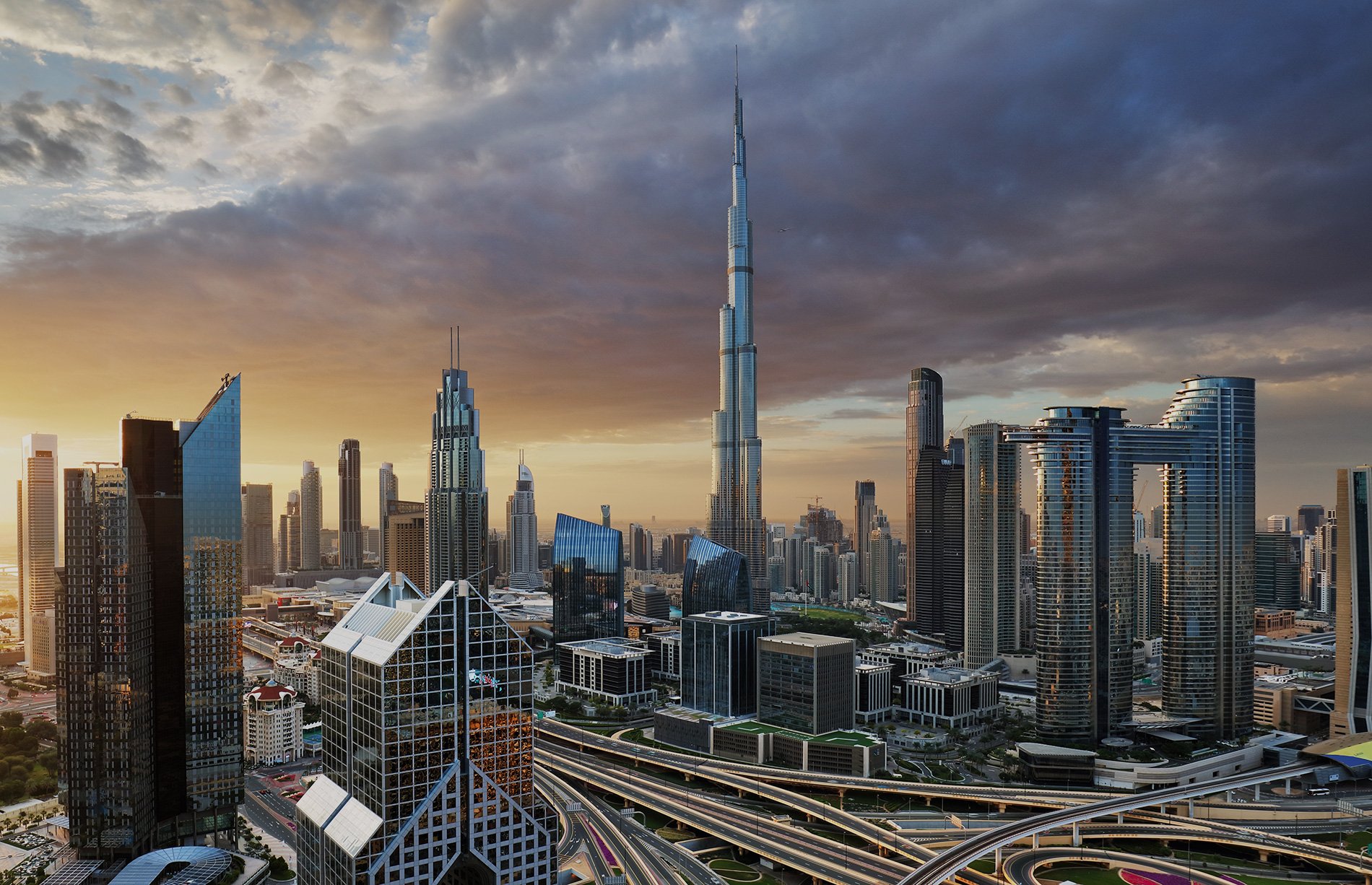
Chairs of foreign business councils operating under the umbrella of the Dubai Chamber of Commerce, representing the nationalities of investors in the emirate, affirmed that Dubai continues to consolidate its position as a global model of resilience and the ability to adapt to international changes.
This is achieved through Dubai’s integrated economic ecosystem, which combines a forward-looking vision, proactive government policies, and openness to trade and investment, alongside a close and effective partnership between the public and private sectors.
The business council chairs pointed out that Dubai’s competitive advantages—including economic diversification, advanced infrastructure, and high institutional readiness—play a key role in strengthening the confidence of the international business community in the emirate’s ability to transform challenges into new growth opportunities. They also stressed the importance of clear and efficient government communication and continuous dialogue with the business community in supporting a business environment based on trust, transparency, and cooperation, thereby ensuring business continuity and reinforcing Dubai’s position as a leading global hub for trade, investment, and innovation.
Siddharth Balachandran, Chairman of the Indian Business and Professional Council in Dubai, stated that the flexibility of Dubai’s economic model is primarily the result of a carefully considered long-term vision, which is not limited to clarity of goals, but is also characterized by high efficiency in execution, ensuring sustainable growth and enhanced economic stability.
He added: “As a businessman, I feel a high degree of calm and confidence when making my investment decisions under the current conditions. This reflects the level of security and stability that Dubai provides to investors. In this context, my investment firm, headquartered in the Dubai International Financial Centre, recently completed the acquisition of a stake in a bank operating in Dubai, and I intend to strengthen and expand this engagement in the coming period. This reflects the strong conviction I and the wider investment community have in Dubai and its long-term economic fundamentals.”
He explained that Dubai’s distinctiveness lies not only in policymaking and establishing appropriate regulatory frameworks, but also in placing strong emphasis on the effective implementation of these policies, along with continuous monitoring to measure their efficiency on the ground. He noted that Dubai’s development journey is based on key pillars, including tolerance, social responsibility, clarity of vision, and constant readiness—values that ensure meeting the essential needs of all members of society, while reinforcing the belief that every segment of society contributes to economic growth.
Balachandran further noted that proactive government policies ensure integration among all components of society, citizens and residents alike, and encourage a culture of responsibility. He added that the high level of harmony and cooperation between the public and private sectors enhances Dubai’s ability to respond flexibly and swiftly to external challenges, through a unified and comprehensive model in which government entities operate as a fully integrated system working in complete alignment and shared responsibility.
For her part, Katie Keenan, Chief Executive of the British Chamber of Commerce Dubai (British Business Group), said that sector-focused business groups established by Dubai Chamber provide a comprehensive and diverse platform to convey the voice of the business community, complementing the global support offered by Dubai Chambers’ international offices and business groups operating in Dubai. She noted that this unique network contributes continuous and effective insights that enhance the efficiency and development of the economic model.
She added: “Maintaining growth momentum under current conditions largely depends on continued investment in infrastructure, alongside the inflow of foreign direct investment supported by Dubai’s strong and well-established trade relations with countries around the world. While acknowledging that this phase presents challenges for many companies, Dubai’s strong track record of resilience and rapid recovery remains a key factor in sustaining growth.”
She continued: “Engaging all stakeholders and ensuring clear communication are essential elements in managing crises. In this regard, the Government of Dubai continues to present an effective model through providing reliable updates characterized by clarity and a human-centered approach, in addition to offering interactive channels with the business community, such as the Business Continuity Survey, which allows companies to share feedback and assess their operational conditions.”
Kanat Kutluk, Chairman of the Turkish Business Council, affirmed that Dubai has consistently demonstrated a remarkable ability to adapt to global changes while maintaining strong economic momentum. He explained that the emirate’s economic model is based on diversification, openness to global trade and investment, and forward-looking leadership that prioritizes innovation and competitiveness.
He said: “Even during times of global uncertainty, Dubai continues to provide a stable and dynamic environment that enables companies from around the world to grow with confidence. The Turkish business community recognizes that this resilience is reflected in the continued expansion of trade, growing investment opportunities, and strengthening cross-border partnerships between the UAE and Turkey.”
Kutluk added: “One of the key pillars of Dubai’s economic strength lies in the government’s proactive approach and future-oriented vision. Through strategic policies, world-class infrastructure, and effective regulatory frameworks, the private sector is able to operate with flexibility and confidence over the long term. In addition, high institutional readiness and close public-private collaboration contribute to establishing a business ecosystem based on trust, transparency, and shared development goals.”
He continued: “For the international business community in Dubai, this partnership-driven model holds significant value. It enhances dialogue, facilitates investment flows, and enables business councils and groups to actively contribute to Dubai’s economic success. As a result, Dubai continues to strengthen its position as one of the world’s leading hubs for trade, entrepreneurship, and global economic connectivity, while maintaining sustainable long-term growth.”
Fahmi Ansara Dahalan, Chairman of the Malaysian Business Council, stated that Dubai’s resilience stems from the leadership’s forward-looking vision, strong institutions, and close cooperation between the public and private sectors. He emphasized the growing confidence among Malaysian companies operating in the UAE, supported by Dubai’s open, efficient, and globally connected economy.
He added: “In this context, the clarity of leadership vision stands out, along with the continuous commitment to developing and updating systems, policies, and infrastructure, ensuring alignment with global changes and readiness to seize future opportunities.”
He continued: “As a long-term resident of Dubai, I have personally observed how the UAE consistently prioritizes the safety and well-being of both citizens and residents. Even during challenging times, the level of preparedness, clear communication, and proactive approach adopted by the relevant authorities instills reassurance across the community and strengthens confidence in Dubai’s ability to navigate global developments while maintaining economic momentum. The message is clear: Dubai is moving forward steadily to remain one of the world’s most trusted destinations for living, working, and doing business.”
Peggy Schierbenberg, Chairwoman of the Belgian Business Council, affirmed that Dubai has consistently demonstrated its ability to recover from global challenges, often surpassing pre-crisis growth levels. Given its strong track record in crisis management, she expressed confidence that Dubai will successfully overcome current conditions as well.
She said: “Through our daily engagement with Belgian companies operating in Dubai, we clearly see the level of confidence they have in the emirate’s economic model. The resilience we have witnessed in the past continues to shape how the international business community views Dubai today. The city is not only resilient but is built on solid foundations that enable it to adapt and thrive even in an uncertain world, supported by a diversified economic base, prudent management, and a long-term vision.”
She added that across sectors—including trade, logistics, finance, technology, hospitality, and advanced manufacturing—business activities continue even during challenging periods. She cited Emirates Airline as a prominent example, noting how quickly it restored near-full operational capacity once conditions allowed, reflecting Dubai’s speed in adapting to changing circumstances.
Schierbenberg stressed that these strengths reinforce global business confidence in Dubai, positioning it not only as a safe choice but as a platform for growth and a gateway to regional and global markets. She also highlighted the strong collaboration between government and private sector, noting the presence of open and constructive dialogue that leads to practical solutions when challenges arise.
Werner Baumgartner, Chairman of the Austrian Business Council, stated that Dubai has consistently emerged stronger from every regional and global crisis. He expressed strong confidence that it will overcome current challenges with even greater strength, supported by several key factors, foremost among them the deep trust it has built among both citizens and residents through stability, organization, and forward-looking governance.
He added that Dubai has evolved beyond a regional city into a global platform for business, talent, capital, and innovation—one that does not weaken in times of crisis but adapts, recovers, and grows stronger.
Dr. Firas Adel Al-Salem, Chairman of the Kuwaiti Business Council, stated that Dubai has proven its ability to sustain growth and business momentum despite challenges. He emphasized confidence in the government’s ability to steer the economy toward stability even under difficult conditions.
He noted that public-private partnership is a fundamental element of any successful economy, and achieving a high level of coordination between both sides is essential to maintaining current economic resilience and avoiding setbacks that could impact the private sector.
He added that the initiative launched by Dubai Chambers to hold meetings with investors and business leaders from around the world to discuss current challenges is both timely and important, reflecting Dubai’s commitment to supporting the business community and addressing logistical challenges affecting various sectors due to recent regional developments.
Suren Swaminathan, Chairman of the Sri Lankan Business Council, said: “Having lived and worked in Dubai for more than four decades, I have personally witnessed how the emirate has overcome numerous global and regional challenges. In each instance, despite global slowdowns or temporary disruptions, Dubai has consistently demonstrated an exceptional ability to adapt, recalibrate growth, and emerge stronger.”
He added that Dubai’s economic resilience is rooted in its leadership’s forward-looking vision, openness to global trade and investment, and strong public-private partnership. Over the years, the emirate has built world-class infrastructure, advanced regulatory frameworks, and a diversified economy that enables it to respond effectively to global developments while maintaining investor confidence.
He also praised the UAE’s cohesive and inclusive society, where more than 200 nationalities feel a strong sense of belonging, describing this as a key strength that reinforces confidence among global businesses and professionals.
Evangeline Monjardine, Chairwoman of the Philippine Business Council, stated that Dubai has consistently demonstrated strong resilience even amid regional and global uncertainty. From the perspective of the Philippine business community, Dubai’s flexible economic model allows sectors such as food, retail, construction, tourism, hospitality, and logistics to respond effectively to supply chain disruptions and shifting trade patterns.
She noted that businesses in Dubai have adapted their operations by enhancing delivery services, adopting scenario planning, and expanding the use of virtual solutions, reflecting the emirate’s ability to maintain growth momentum while strengthening sector-level resilience.
Mohammad Shabbir, Chairman of the Pakistani Business Council, concluded that Dubai’s economic model has demonstrated a high level of resilience and adaptability over the years, enabling the emirate to strengthen its position as a global hub for trade, tourism, finance, and innovation.
He emphasized that Dubai’s strength lies in its diversified economy, forward-looking leadership, and proactive policies that continuously support sustainable growth and attract investment, alongside a transparent regulatory environment and strong alignment between government vision and a dynamic private sector.

Leave a Reply