Dubai and Abu Dhabi have firmly established themselves among the world’s most dynamic and influential economic cities after British research firm Oxford Economics included them in a group of 28 cities with strong growth potential and an increasing ability to help reshape the global economic landscape in the coming years.
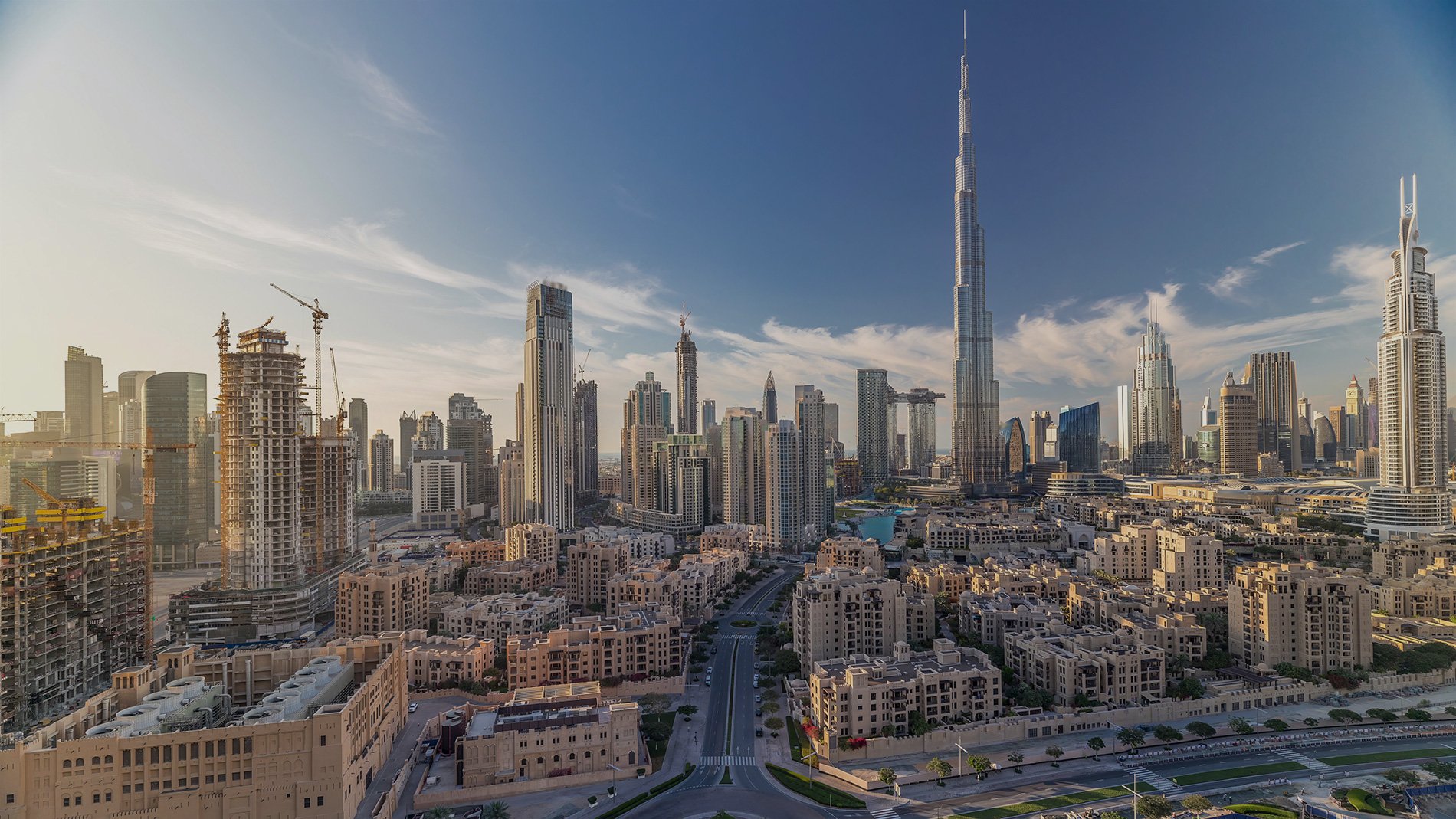
Dubai recorded one of the most notable advances in the ranking, climbing nine places to 42nd globally and entering the list of the world’s top 50 cities. The achievement reflects the emirate’s growing economic stature and its continued ability to compete with leading international urban centers.
The rise was supported by Dubai’s strong performance in human capital, where it ranked second globally, while also securing 53rd place worldwide in the economic category.
The results highlight Dubai’s success in combining a strong economy with an attractive business environment and the ability to draw highly skilled professionals from around the world, alongside continued progress in quality of life, infrastructure, and the regulatory environment.
Oxford Economics’ Global Cities Index is based on five main pillars: economics, human capital, quality of life, environment, and governance. Together, these categories provide a broad assessment of each city’s ability to achieve sustainable growth and strengthen its international competitiveness.
Human Capital Supports Dubai’s Global Rise
Human capital emerged as one of the strongest factors behind Dubai’s advance in the global ranking, as the emirate continues to reinforce its position as a preferred destination for skilled professionals, experts, and talent from around the world.
Oxford Economics analysts linked this performance to structural reforms introduced by Dubai in immigration and residency policies, particularly programs such as the Golden Visa and retirement residency schemes. These initiatives have strengthened the emirate’s ability to attract skilled professionals, high-income residents, and individuals seeking long-term residency.
The results underline how competition among global cities is no longer determined solely by the size of their economies or the volume of investment flows. The ability to attract and retain talent, while providing an appealing environment in which to live and work, has become one of the most important foundations of modern economic strength.
Dubai’s second-place global ranking in human capital reflects the success of its model in attracting international expertise and creating an environment that supports work, investment, and long-term residency, helping drive innovation, improve productivity, and broaden the foundations of economic growth.
Dubai Strengthens Its Position on the Global Economic Map
Dubai’s progress in the ranking further confirms its growing presence on the international economic map, as the emirate continues to develop an economic model built on diversification, openness, and the attraction of global investment and talent.
Dubai’s entry into the world’s top 50 cities reflects the strength of the foundations on which the emirate has built its economic position, including advanced infrastructure, ease of doing business, openness to international markets, and continuous investment in improving quality of life.
This combination gives Dubai a strong ability to attract companies, investors, and highly skilled professionals, while reinforcing its position as a global hub for trade, financial services, tourism, technology, and the new economy.
The emirate’s rise also demonstrates the growing importance of human capital in supporting its competitiveness, particularly as skills, expertise, and innovation play an increasingly important role in modern economies.
Abu Dhabi Maintains Strong Appeal for Global Talent
Abu Dhabi also continues to demonstrate strong performance in areas related to human capital and talent attraction, ranking sixth globally in the human capital category.
The result reflects the emirate’s ability to attract skilled professionals and expertise while advancing through a broad economic transformation and accelerating efforts to diversify its sources of growth.
The report noted that the strength of Abu Dhabi’s economy serves as an important driver of economic activity across the other emirates and the wider region, as the capital expands its development of diversified economic sectors and strengthens its role as a regional economic and investment hub.
Abu Dhabi benefits from a strong economic base and substantial investments across a range of future-oriented sectors, including technology, industry, energy, financial services, and non-oil industries.
Its advanced position in human capital also reflects its growing appeal to international talent and the increasingly important role that skills and expertise play in supporting economic transformation and strengthening long-term competitiveness.
A Strong Economy and Quality of Life Create an Integrated Growth Cycle
Liam Sides, Director of City Services and lead author of the report, explained that the performance of cities such as Dubai and Abu Dhabi reflects what can be described as a “circular growth loop,” in which a strong economy improves quality of life, enhancing a city’s ability to attract skilled professionals and talent. These individuals, in turn, help sustain economic momentum and strengthen the city’s ability to withstand shocks.
This relationship highlights the importance of combining economic growth with improvements in quality of life and a city’s attractiveness as a place to live and work, all of which have become increasingly important in determining global competitiveness.
Skilled professionals and talented individuals also play a growing role in supporting innovation, productivity, and the expansion of new industries, giving cities that successfully attract and retain them an important advantage as economic and technological changes accelerate.
Riyadh Records a Major Jump in the Ranking
The strong Gulf presence among rising global cities was not limited to the UAE. Riyadh also recorded a notable advance, climbing 47 places to reach 50th globally.
The Saudi capital ranked fourth worldwide in human capital and 18th in the economic category.
The progress reflects the rapid economic and social developments taking place in Riyadh, along with major diversification initiatives and large-scale investments that continue to strengthen its position as a growing regional economic center.
The ranking highlights the rise of three major Gulf cities — Dubai, Abu Dhabi, and Riyadh — as increasingly competitive global centers for human capital, investment, and innovation.
These cities are also benefiting from long-term economic strategies focused on diversifying sources of growth, strengthening infrastructure, improving quality of life, and increasing their ability to attract global companies and talent.
Gulf Economies Demonstrate Resilience Amid Challenges
The performance carries additional significance against the backdrop of challenges and disruptions across the region, with Gulf economies demonstrating a clear ability to absorb shocks while maintaining economic momentum.
Gulf countries have benefited from strong financial centers, continued economic diversification, and the growing contribution of non-oil sectors to economic growth.
In the UAE, the non-oil private sector showed signs of a strong recovery, with the S&P Global Purchasing Managers’ Index in August recording its highest rate of growth since December 2024.
In Saudi Arabia, the non-oil private sector posted its strongest expansion in six months, highlighting continued economic activity and momentum across non-oil industries.
These indicators support a broader picture of the resilience of Gulf economies and their ability to continue growing while advancing major economic transformation and diversification plans.
New York Leads the Global Cities Ranking
Traditional economic centers maintained leading positions in the Global Cities Index, with New York ranking first worldwide, followed by London, Paris, Seattle, San Francisco, Dublin, Boston, San Jose, Tokyo, and Zurich.
These cities benefit from extensive networks of companies, institutions, capital, and expertise, giving them a strong ability to adapt to changes in the global economy.
At the same time, the rise of cities such as Dubai, Abu Dhabi, and Riyadh demonstrates the expanding nature of global competition and the emergence of new economic centers built around human capital, quality of life, economic openness, innovation, and diversified sources of growth.
These factors are increasingly becoming central to determining the position of cities and their ability to strengthen their presence in the global economy.