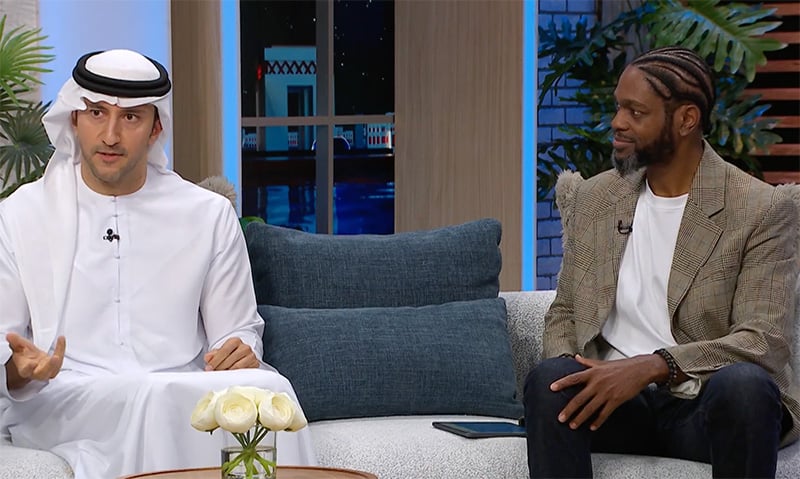
A thematic summary of Omar Buti’s podcast episode
What Omar Buti is really describing is not a city that accidentally became fashionable, but a city that deliberately made itself useful. The logic of Home Grown Dubai is clear in Dubai Media Incorporated’s own description of the show: it spotlights decision makers, investors, entrepreneurs, artists, and designers who chose Dubai as the place to build companies, launch ideas, and scale them to the world across fields like architecture, art, technology, hospitality, and fashion.
The episode’s deeper argument is that Dubai’s success with entrepreneurs comes from reducing friction. In many places, ambition gets trapped in paperwork, licensing delays, and regulatory ambiguity. In the UAE, company formation is presented as a process with only a few simple steps, and official government platforms say a business can be established online in as little as 15 minutes through Basher. Dubai also offers founders a practical choice between mainland and free zone structures, rather than forcing everyone into one rigid model.
That matters because founders do not move only for glamour; they move for clarity. Dubai’s appeal is partly financial, but not in the simplistic “tax free paradise” sense people often repeat. Official UAE sources say individuals do not pay income tax, while the corporate tax framework applies a 0% rate to taxable income up to AED 375,000 and 9% above that threshold. Just as important, the Ministry of Finance says the regime was designed to remain competitive while aligning with international standards and minimizing compliance burdens. In other words, Dubai’s pitch is not chaos without rules; it is competitiveness with rules.
Buti’s point also makes more sense when placed inside Dubai’s wider economic story. The city is not treating entrepreneurship as a side effect of growth; it is treating it as a core growth engine. The Dubai Economic Agenda, D33, aims to double the size of Dubai’s economy over the next decade and position the city among the world’s top three destinations for living, working, and investing. That kind of agenda matters psychologically as much as economically: it tells founders that the city wants them, and has built policy around attracting them.
Where the episode becomes especially interesting is in how it connects entrepreneurship with the creator economy. Dubai is not simply courting traditional business owners; it is trying to formalize creativity itself as an economic sector. Dubai Culture says the Dubai Creative Economy Strategy aims to make the city a preferred destination for global talent and the global capital of the creative economy by 2026 through the right legislative and investment environment. When the strategy was launched, the stated goals included doubling the creative industries’ contribution to GDP to 5%, increasing the number of creative companies to 15,000, and expanding the number of creators to 140,000.
This is where Dubai differs from cities that celebrate creativity in language but do not build systems around it. Dubai already has physical media infrastructure that gives content creation a real industrial base. According to Dubai Media Office, Dubai Media City helped create a wider Media Cluster that now supports more than 40,000 creative professionals and hosts more than 60% of Fortune 500 companies in the media sector. It is not just a symbolic hub; it is a working ecosystem where broadcasters, producers, startups, freelancers, and digital creators operate in the same orbit.
And the city has continued to push that logic forward. In January 2025, the UAE launched Creators HQ in Dubai, describing it as a platform meant to attract 10,000 influencers, backed by a AED 150 million Content Creators Support Fund. Official reporting says the initiative offers creators practical support such as company setup and registration help, relocation support, Golden Visa assistance, and a year round calendar of workshops and events. That matters because it turns “creator” from a vague internet identity into a profession with infrastructure, networks, and pathways to scale.
Even regulation is part of that story. The UAE Media Council’s advertiser permit framework was introduced as a way to regulate advertising content and protect both society and creators, and the permit was announced as free for three years for UAE citizens and residents as a support measure. That suggests a broader philosophy running underneath the episode: Dubai wants the creator economy to grow, but it wants it to grow as a real economy, legible, investable, and professionally organized.
So the real takeaway from Omar Buti’s episode is not merely that Dubai is attractive. It is that Dubai has become attractive in a very specific way: it combines speed with structure, ambition with administration, and creativity with commercial logic. Entrepreneurs come because the city lowers the cost of starting. Creators stay because the city is increasingly building an ecosystem where attention can become enterprise. And that may be the strongest idea in the whole conversation: Dubai is no longer just a place where people do business, it is a place that has learned how to turn talent itself into an economy.
Recorded on: Nov 14, 2025