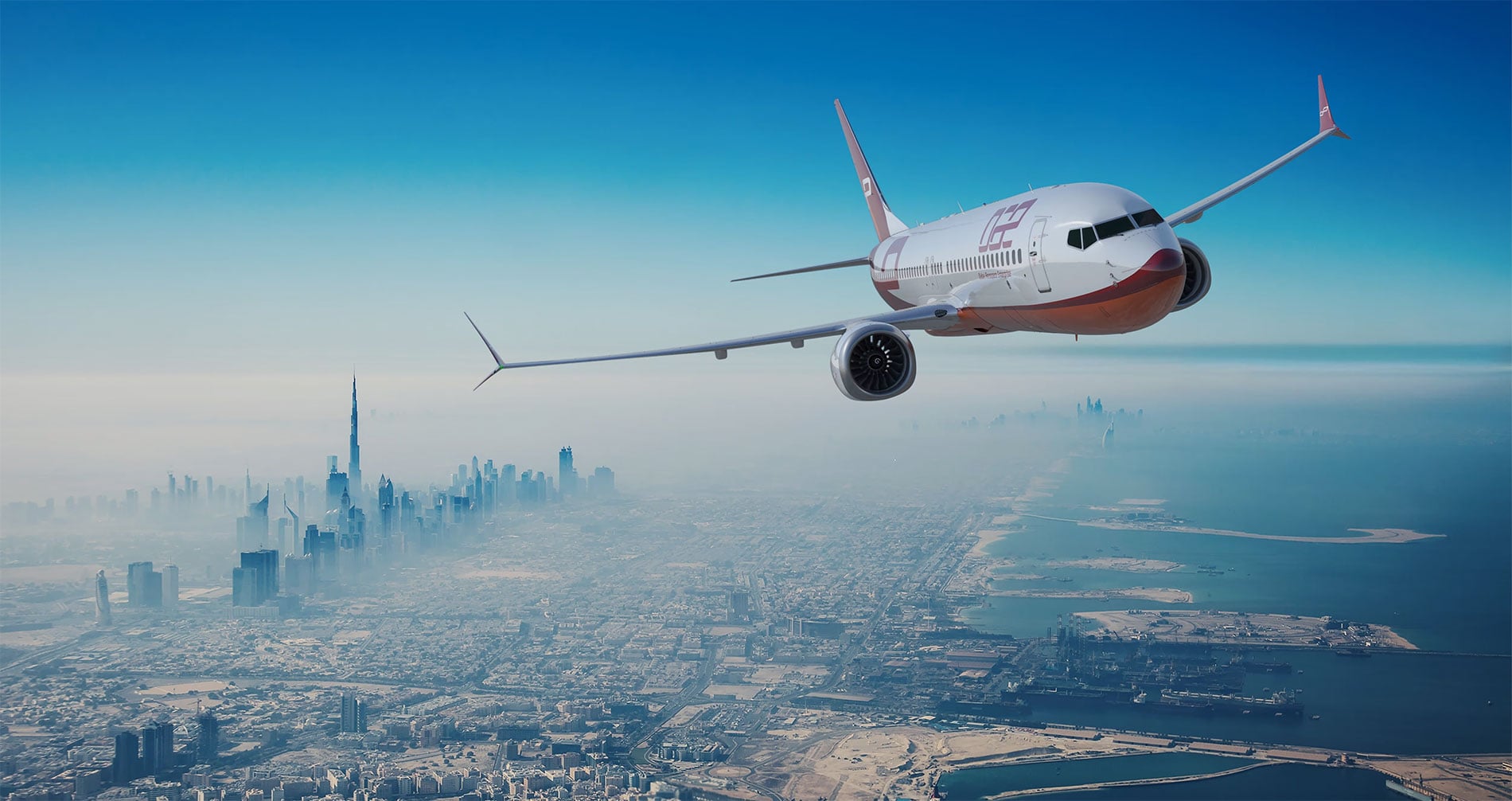
Dubai Aerospace Enterprise (DAE) Ltd., a global aviation services company, reported revenue of AED 5.314 billion for the nine months ended September 30, 2026, up 13.25% from AED 4.692 billion during the same period in 2025.
The company’s profit before tax and exceptional items rose 8.8% to AED 1.361 billion, compared with AED 1.252 billion in the first nine months of last year. Operating cash flow reached AED 3.996 billion, against AED 4.140 billion in the corresponding period.
DAE reported an adjusted pre-tax profit margin of 25.6%, compared with 26.7% a year earlier. Its pre-tax return on equity stood at 11.8%, down from 13.6% during the same period in 2025.
Total Assets Rise to AED 98.5 Billion as DAE Expands Its Operations
DAE’s balance sheet expanded considerably during the first nine months of 2026, with total assets reaching AED 98.550 billion at the end of September, compared with AED 60.771 billion on December 31, 2025.
The increase came alongside the company’s expanding aircraft portfolio and broader operations in the global aircraft leasing market.
Net loans and borrowings stood at AED 61.519 billion, up from AED 37.561 billion at the end of last year, while the net debt-to-equity ratio was 2.60 times, compared with 2.58 times previously.
The share of unsecured debt also edged higher, reaching 88.3%, compared with 87.8% at the end of 2025.
Available Liquidity Climbs Above AED 20.5 Billion, Supporting DAE’s Financial Position
Alongside the growth in its asset base, Dubai Aerospace Enterprise reported a significant increase in available liquidity, which reached AED 20.560 billion at the end of September 2026, compared with AED 12.487 billion at the close of 2025.
The company’s liquidity coverage ratio also improved substantially, rising to 440% from 277% over the same period.
These figures come as DAE continues expanding its aircraft leasing operations and integrating its latest acquisition, with liquidity and capital adequacy remaining important elements of its financial position.
The stronger liquidity position accompanies the company’s growing aircraft portfolio and its continued activity across international aviation markets.
Macquarie AirFinance Acquisition Doubles DAE’s Aircraft Portfolio and Secures Second Place Globally
DAE completed its previously announced acquisition of Macquarie AirFinance (MAF) at the end of July 2026, marking a major expansion of its aircraft leasing business.
Following the acquisition, the company’s combined portfolio of owned, managed, and on-order aircraft reached approximately 1,000 aircraft, twice its size just 24 months earlier.
Firoz Tarapore, Chief Executive Officer of Dubai Aerospace Enterprise, said: “At the end of July, we completed the previously announced acquisition of Macquarie AirFinance (MAF), bringing our total fleet of owned, managed, and on-order aircraft to approximately 1,000 aircraft, equivalent to twice its size 24 months ago. With our owned fleet of 716 aircraft, we now rank second globally among aircraft leasing companies.”
With 716 aircraft in its owned fleet, DAE holds the position of the world’s second-largest aircraft leasing company by owned fleet size.
The acquisition also expands the company’s ability to serve airline customers across different markets, while increasing the scale of its aircraft leasing activities.
DAE Moves Toward a Combined Fleet of 1,300 Aircraft Through Acquisitions and Management Mandates
Dubai Aerospace Enterprise is continuing to expand its international aircraft portfolio through the Macquarie AirFinance acquisition and previously announced management mandates from Blackstone and Neuberger.
With these mandates successfully implemented, the company’s combined portfolio of owned, managed, on-order, and mandated aircraft is expected to approach 1,300, further extending the scale of its operations and services to airlines worldwide.
Tarapore added: “The acquisition of MAF, together with the previously announced mandates from Blackstone and Neuberger, gives us a much greater ability to provide more integrated solutions to our airline customers, deepens our dialogue with suppliers, and expands our network of relationships in the market. With the successful execution of these mandates, we are on track to reach a combined fleet of approximately 1,300 aircraft. Following the completion of the MAF transaction, liquidity and capital adequacy indicators remain strong, reflecting our commitment to stakeholders that major transactions are supported by sufficient capital and fully funded from the closing date.”