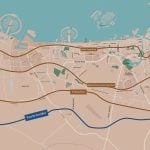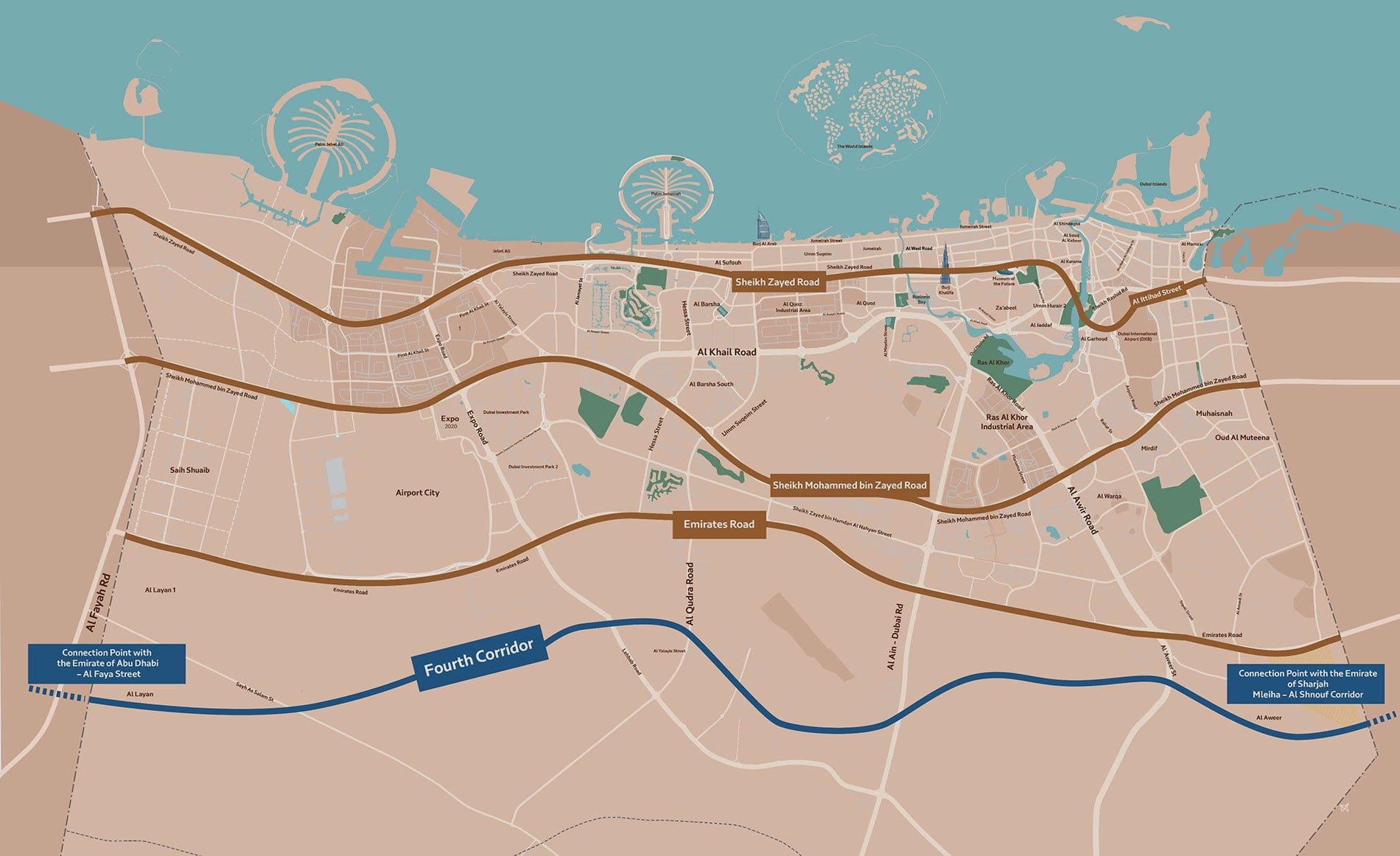
Dubai’s Fourth Corridor is opening up fresh opportunities for real estate investment, with improved road connections expected to support urban expansion and attract more residential, commercial, and logistics developments. The project will add another major transport route linking Dubai, Sharjah, and Abu Dhabi, while supporting growth across the emirate’s eastern and southern areas, including locations around Al Maktoum International Airport.
Stretching approximately 80 kilometers, the corridor has an estimated first-phase cost of AED 3.5 billion and will include 72 bridges, 17 tunnels, and 12 traffic lanes. The project aims to reduce journey times by up to 52% and serve around 3.1 million people. Alongside improving traffic flow, the new route will strengthen access to major employment centers, residential communities, and transport networks, creating further opportunities for property development along the corridor.
Dubai Real Estate Market Poised for New Investment Opportunities
Real estate developers see the Fourth Corridor as an important addition to Dubai’s infrastructure, with the potential to increase interest in emerging communities and support long-term property investment. Ahmed Al Suwaidi, General Manager of Masaken Dubai, highlighted how improved connectivity can make residential areas more attractive to residents and investors. He stated, “Ultimately, roads alone do not create real estate value, but they provide the environment that supports its growth.”
Farhad Azizi, CEO of Azizi Group, also emphasized the project’s importance in supporting Dubai’s urban and economic expansion. With connections to Al Maktoum International Airport, Etihad Rail, and major road networks, the corridor could encourage the development of residential communities, mixed-use projects, and commercial and logistics facilities. Azizi explained that infrastructure development remains an important consideration in the group’s land acquisition and project planning strategies, particularly as Dubai continues to expand southward.
The corridor will also support commercial transport by helping direct through traffic, especially trucks, away from urban areas. This improvement is expected to benefit residential communities while strengthening the movement of goods and supporting business activity around major economic and logistics centers.
Hind City, Latifa City, Al Yalayis, and Al Awir Among Key Beneficiaries
Hind City, Latifa City, Al Yalayis, Al Awir, and Dubailand are among the areas expected to benefit from the Fourth Corridor. Improved access to major highways, Al Maktoum International Airport, and Etihad Rail is expected to increase their appeal for residential and commercial investment. Developers see opportunities for new housing communities, retail facilities, and mixed-use projects, alongside warehouses, distribution centers, and logistics developments in locations suited to these activities.
Imran Farooq, CEO of Samana Developers, believes the project will create further opportunities for real estate investment as Dubai continues to expand its infrastructure. He noted that property prices in Dubai generally range from AED 1,400 to more than AED 1,900 per square foot, depending on the location and quality of finishes. He also highlighted promising urban areas offering net annual rental yields of between 8% and 10%.
Samana is studying additional investments and innovative residential projects that could benefit from the corridor’s improved connectivity. The company is focusing on modern residential communities with integrated facilities, in line with the growing demand for quality housing in Dubai’s expanding development areas.
Deyaar: Improved Connectivity Could Boost Demand for Nearby Land and Properties
Hamdan Al Kaitoob, Senior Vice President of Sales and Marketing at Deyaar Development, highlighted the importance of the Fourth Corridor in supporting real estate growth and increasing interest in land and projects located near the route. Better access to employment centers and residential communities could make these locations more attractive to homebuyers, businesses, and investors.
The project’s first phase is expected to reduce journey times from 35 minutes to approximately 14 minutes, serving around 600,000 people. This improvement could encourage further residential and commercial development, supported by the expansion of retail facilities and community services.
Speaking about the corridor’s impact on the property market, Al Kaitoob stated, “An infrastructure project of this scale can have a tangible impact on property values, but that value develops gradually over time, not simply upon the announcement of the project.”
Deyaar continues to monitor investment opportunities across Dubai as infrastructure and residential communities develop. The company recently completed Tria in Dubai Silicon Oasis, a residential project close to the Fourth Corridor that includes 711 residential units and six commercial units. The completion brought Deyaar’s total deliveries in 2026 to more than 2,100 units, following the handover of 1,436 units during the first half of the year.
Dubai Real Estate Outlook: Urban Expansion and Long-Term Investment Opportunities
Dubai’s Fourth Corridor represents another significant investment in the infrastructure supporting the emirate’s continued urban and economic growth. By strengthening connections between Dubai, Sharjah, and Abu Dhabi, as well as providing access to Al Maktoum International Airport and Etihad Rail, the project will help expand the range of locations available for residential, commercial, and logistics development.
For real estate investors, the corridor brings particular attention to emerging areas where improved accessibility, new communities, and expanding services could support stronger demand for properties and commercial spaces. As development progresses, locations such as Hind City, Latifa City, Al Yalayis, Al Awir, and Dubailand are expected to attract growing interest from developers and investors.