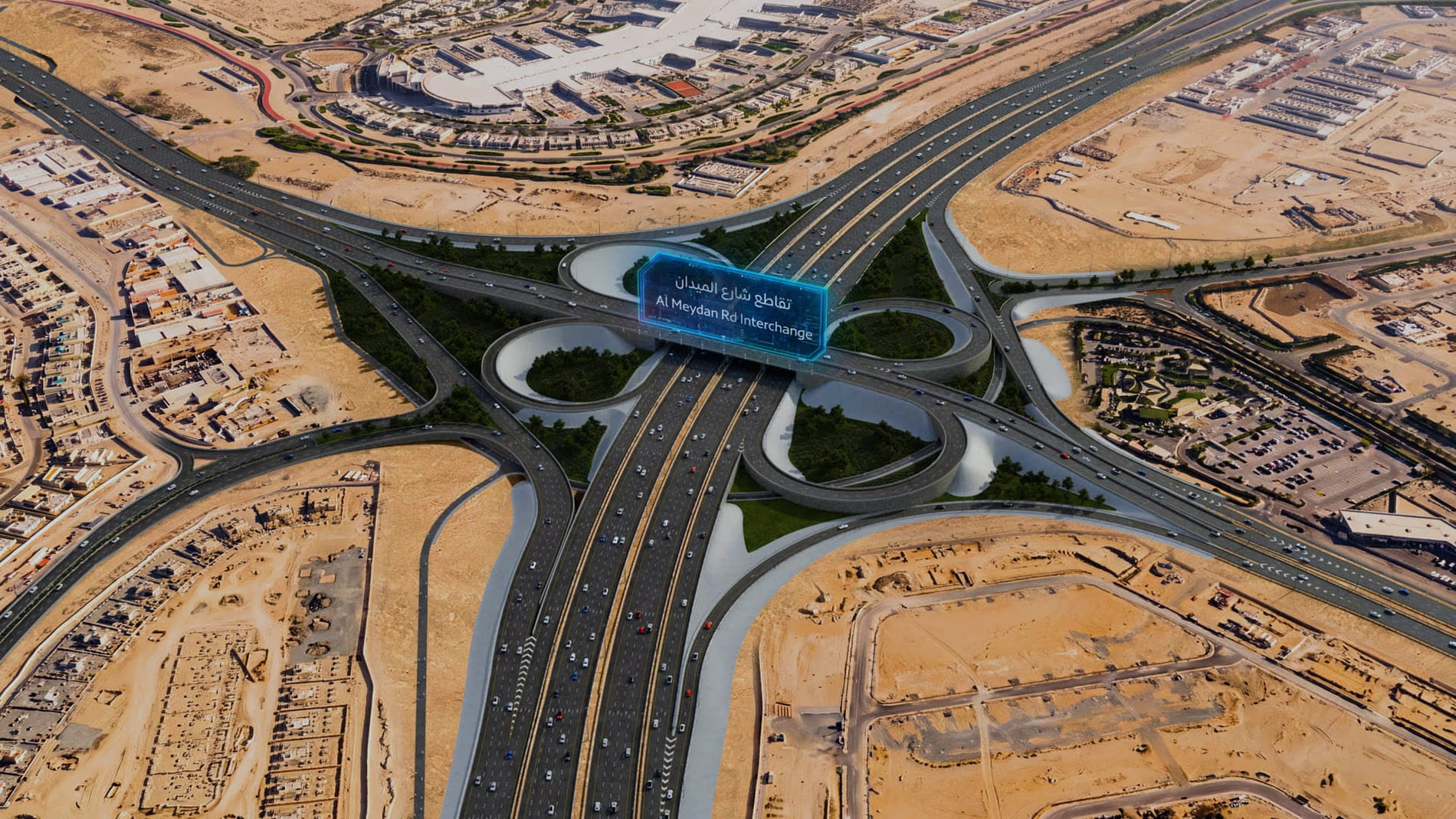
Dubai’s Roads and Transport Authority has awarded two contracts for the Meydan Street Development Project, one of the major strategic projects aimed at enhancing the emirate’s main road network, at a total cost of AED 1.161 billion.
The project comes as part of the authority’s ongoing efforts to improve the efficiency of Dubai’s road network and increase its capacity to accommodate expected urban and population growth, while also supporting development projects and residential communities located along the corridor.
Given the scale of the project and the diversity of its engineering components, the works have been divided into two contracts to accelerate completion and deliver traffic and development benefits more quickly, while maintaining full integration between the different parts of the project.
The Meydan Street Development Project includes the construction of bridges with a total length of 3,700 meters, as well as the development and construction of 17 kilometers of roads. It will also include cycling tracks connected to the existing network.
The project will serve a number of residential and development areas with a combined population of more than 500,000 people and is expected to be completed by the end of 2028.
Major Project Divided Into Two Contracts to Speed Up Delivery
The Roads and Transport Authority said the decision to divide the Meydan Street Development Project into two contracts reflects the large scale of the works and the variety of engineering components involved, helping accelerate implementation and achieve greater efficiency in delivery.
Mattar Al Tayer, Director General, Chairman of the Board of Executive Directors of the Authority, said that the wise leadership has made investment in infrastructure a fundamental pillar for supporting comprehensive development, enhancing Dubai’s competitiveness, and consolidating its position as a leading global city for living, working, and investing.
He added: “Meydan Street is one of the most important strategic corridors in Dubai, as it serves as a parallel and supporting corridor to Sheikh Mohammed bin Zayed Road and Al Khail Road. It contributes to strengthening connectivity across the main road network, providing alternative routes that support traffic distribution, enhancing traffic flow, and improving mobility efficiency between key areas.”
He explained that the Meydan Street Development Project is one of the most important strategic projects being implemented by the authority to enhance the efficiency of Dubai’s main road network. It serves as a parallel and supporting corridor to Sheikh Mohammed bin Zayed Road and Al Khail Road and strengthens connections between several key residential and development areas.
The project is being implemented as part of a comprehensive vision to develop Dubai’s strategic road corridors, enhance traffic flow, increase the capacity of the road network, and provide sustainable traffic solutions that keep pace with the emirate’s comprehensive development while supporting current and future urban expansion and development projects.
Al Tayer also stated that, given the project’s scale and the diversity of its engineering components, it was divided into two contracts with the aim of accelerating implementation and completion while maintaining the project’s unity and overall integration.
Meydan Street as a Strategic Corridor in Dubai’s Road Network
Meydan Street is one of Dubai’s key traffic corridors due to its location and its role in connecting several major roads, residential communities, and development areas.
The Meydan Street Development Project extends from its intersection with First Al Khail Street to Umm Suqeim Street, passing through a number of important roads, including Al Khail Road, Latifa bint Hamdan Street, and Al Marabea Street before reaching Umm Suqeim Street.
The project also includes the development of Al Marabea Street up to Sheikh Mohammed bin Zayed Road, further strengthening connectivity between major corridors and providing additional travel options for road users.
Through the project, the authority is pursuing a comprehensive approach aimed at increasing road capacity, improving traffic flow, and supporting the rapid urban development taking place in areas surrounding Meydan Street.
The project also contributes to the objectives of the Dubai 2040 Urban Master Plan and the Dubai Economic Agenda D33 by developing advanced infrastructure capable of accommodating future growth and improving quality of life.
Details of the First Contract for the Meydan Street Development Project
The first contract includes the development of Meydan Street from its intersection with Latifa bint Hamdan Street to its intersection with Umm Suqeim Street, in addition to the development of Al Marabea Street from Dubai Hills to Sheikh Mohammed bin Zayed Road.
The total length of roads covered under this contract is approximately 14 kilometers.
The works include upgrading the intersection of Al Marabea Street and Meydan Street and converting it into a grade-separated interchange with four lanes in each direction. The project will also include the construction of bridges with a total length of 1,600 meters.
Once completed, the interchange is expected to have a capacity of 14,400 vehicles per hour in both directions, allowing free-flowing traffic in all directions and providing a direct connection between Umm Suqeim Street and Latifa bint Hamdan Street.
The project will also create a direct link between Al Marabea Street and Sheikh Mohammed bin Zayed Road, with three lanes in each direction and a total capacity of 7,800 vehicles per hour in both directions.
The contract also includes the construction of a 700-meter elevated connection on Dubai-Al Ain Road toward Nad Al Hamar Street. This will serve residential communities in Nad Al Sheba, improve access to the area, and strengthen its connection to Dubai’s main road network.
Development of the Meydan Street and Muscat Street Intersection
The second contract covers the development of Meydan Street from its intersection with First Al Khail Street, passing through Al Khail Road, to its intersection with Muscat Street.
The contract also includes the construction of new surface roads connecting Meydan Street with Latifa bint Hamdan Street, with a total length of approximately two kilometers. These works will improve connectivity between major traffic corridors and enhance movement between surrounding residential and development areas.
The project includes surface improvements at the intersection of Al Khail Road with the collector road leading toward Ras Al Khor Street.
It also includes converting the intersection of Meydan Street and Muscat Street into a multi-level grade-separated interchange that allows free-flowing traffic in all directions.
Bridges with a total length of 1,400 meters will be constructed, providing four lanes in each direction and a capacity of up to 14,400 vehicles per hour in both directions.
These improvements are designed to enhance traffic efficiency along Meydan Street and improve connections with surrounding roads while accommodating expected growth in nearby areas.
Cycling Tracks and Support for Sustainable Mobility
The second contract also includes the development of an integrated cycling track network within the project area, supporting Dubai’s broader efforts to promote sustainable mobility.
The works include the construction of tunnels beneath Meydan Street to maintain continuity of the cycling routes and connect them with the existing cycling network, providing safer and smoother mobility options for users.
Including cycling tracks within the project will help strengthen integration between different modes of transport while supporting Dubai’s efforts to provide advanced infrastructure that meets the needs of residents and keeps pace with future growth.
This element of the project also reflects the Roads and Transport Authority’s focus on delivering integrated transport solutions that combine improved vehicle movement with greater access to sustainable and alternative modes of mobility.




Leave a Reply