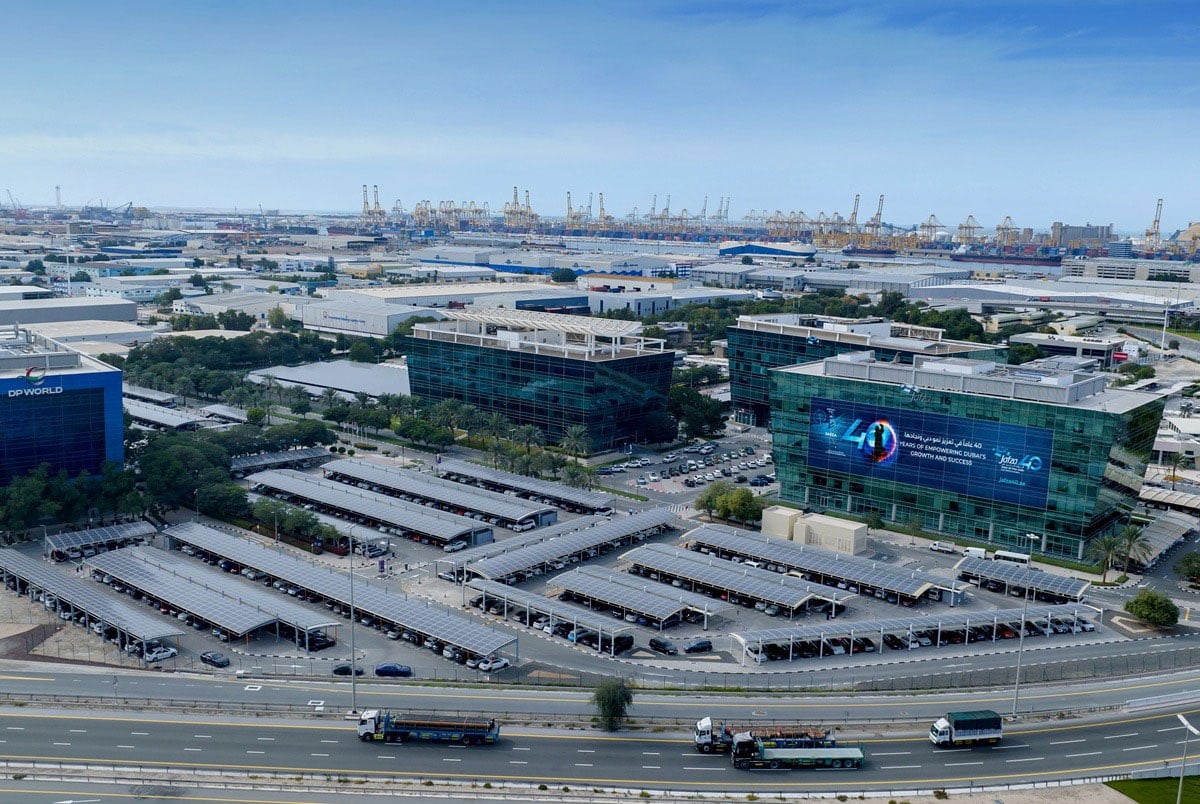
DP World is continuing to grow its global network of economic and logistics zones, with a clear focus on bringing ports, business hubs, logistics services, and supply chains closer together. The aim is to make trade flows more efficient and strengthen connections between major markets around the world.
Recent company data shows that DP World now has 14 economic and logistics zones spread across key markets in North America, Latin America, Europe, Africa, the Middle East, and Asia. Together, these locations cover approximately 7,416 hectares.
Of the 14 zones, 12 are already operating, while two are still under development. The figures reflect DP World’s steady expansion of its integrated economic zone model, which combines commercial areas with port and logistics infrastructure.
The group’s growing international footprint also shows how strongly it is focusing on locations close to major trade routes and important markets. By doing so, DP World can offer companies easier access to storage, distribution, manufacturing, and transportation services within one connected network.
Jafza Leads DP World’s Global Network
Jebel Ali Free Zone, better known as Jafza, stands at the center of DP World’s global network. Located in Dubai, it is by far the largest economic and logistics zone operated by the group, covering around 5,700 hectares.
That means Jafza represents roughly 77% of the total area covered by the 14 zones. Its scale underlines the importance of the wider Jebel Ali ecosystem to DP World’s international strategy, especially given Dubai’s strategic position along major global trade routes.
Jafza forms a key part of the integrated Jebel Ali ecosystem, bringing together Jebel Ali Port, the free zone, and a wide range of logistics and commercial services. For businesses, this creates a practical environment where imports, exports, storage, and redistribution can all be managed within the same broader network.
Dubai’s location also gives Jafza an important advantage. Positioned between Asia, Europe, Africa, and the Middle East, the free zone plays a major role in connecting businesses with regional and international markets.
Growing Presence in Africa and the Americas
DP World’s network also includes a number of important economic and logistics zones across Africa and the Americas, helping the group serve local markets while linking them to international trade routes.
In Senegal, the Dakar Economic Zone covers around 600 hectares, making it one of the largest sites in the group’s network after Jafza.
In the United States, South Carolina Gateway spans approximately 535 hectares, giving DP World a notable presence in the North American market.
In Latin America and the Caribbean, the network includes the Caucedo Logistics Center in the Dominican Republic, which covers 120 hectares, as well as the Posorja zone in Ecuador, with an area of around 108 hectares.
Together, these locations strengthen DP World’s ability to offer integrated logistics solutions close to ports, major markets, and important distribution centers.
Strategic Expansion Across Africa
Africa remains an important part of DP World’s international expansion, with several economic and logistics zones supporting both regional and global trade.
The group’s network includes the Berbera Economic Zone in Somaliland, covering around 52 hectares, as well as the free zone in Djibouti, which spans approximately 31 hectares.
DP World also operates the Kigali Logistics Platform in Rwanda, covering around 20 hectares. The site supports the movement of goods between inland markets and wider international trade gateways.
This growing presence reflects DP World’s strategy of placing economic and logistics hubs close to ports and major transport corridors across Africa. These locations help improve the movement of goods while giving producers, importers, and exporters stronger links to broader transport and global trade networks.
London Gateway Serves as DP World’s European Hub
In Europe, DP World’s network includes London Gateway in the United Kingdom, which covers approximately 90 hectares.
The site is an important part of the group’s presence in the European market, combining port operations with logistics, warehousing, and distribution services.
This integrated approach gives customers the ability to move goods through a connected system, from the port to storage and distribution facilities and then on to their target markets.
DP World’s European operations also fit into its wider strategy of developing logistics and economic hubs close to major trade corridors, helping cargo move more quickly and efficiently.
Logistics Zones in Saudi Arabia and Egypt
DP World’s Middle East network also includes key locations in Saudi Arabia and Egypt.
In Saudi Arabia, the Jeddah Logistics Zone covers around 35 hectares. In Egypt, the Sokhna Economic Zone covers a similar area of approximately 35 hectares.
Both locations benefit from their proximity to ports, transport networks, and major trade centers. This helps businesses manage storage, distribution, and the movement of goods across local and regional markets.
The group’s presence in these markets also supports its wider goal of building a more connected logistics network across the region as trade and supply chain activity continues to grow.
India Is a Key Part of DP World’s Asia Strategy
India is one of the main markets in DP World’s Asian network, with three free trade zones located near some of the country’s most important commercial and industrial centers.
The network includes the Chennai Free Trade Zone, which covers 50 hectares, the Mumbai Free Trade Zone at around 35 hectares, and the Kochi Free Trade Zone, which spans approximately 5 hectares.
These locations give DP World a presence in several of India’s leading business and industrial markets, while also giving companies access to storage, manufacturing, and distribution services close to ports and major trade centers.
This presence supports businesses looking to build more efficient supply chains within India while improving their connections to international markets.


Leave a Reply