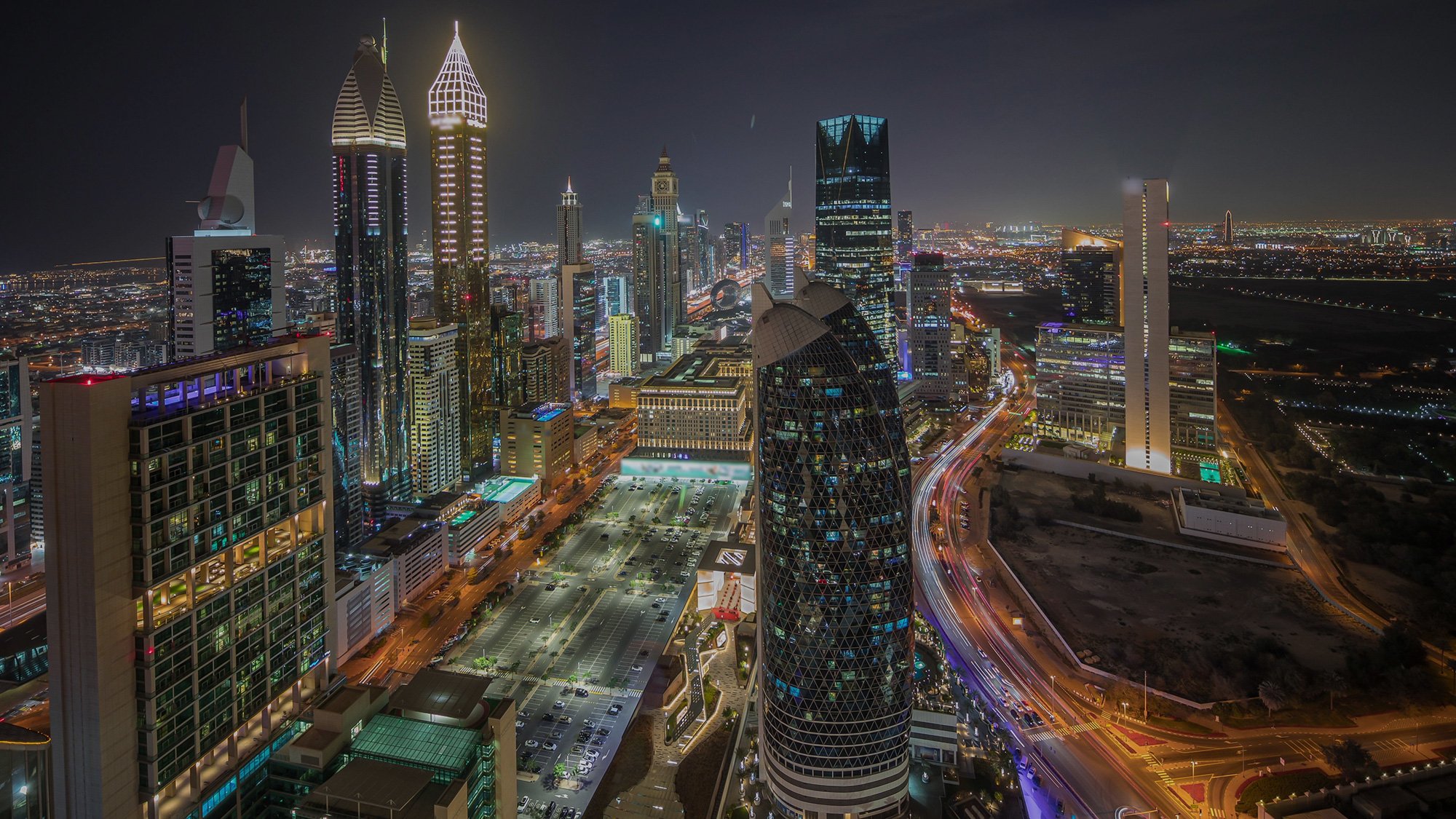
The United Arab Emirates continues to reinforce its presence as an advanced global platform for reshaping trade and investment routes, supported by its developed infrastructure, open economic environment, and strong ability to connect markets. This comes at a time when global capital flows and supply chains are undergoing rapid changes, prompting economies to seek more flexible and reliable corridors.
AIM Congress 2026 in Dubai reflected this direction through discussions focused on developing new channels for trade and investment, exploring routes that can support economic growth, and highlighting the UAE’s experience in attracting capital and improving access to global markets for companies and investors.
Dubai Chambers Pushes for New Growth Routes
As part of the event, Dubai Chambers organized a roundtable titled “Global Trade and Investment Flows: Developing New Routes for Growth,” with the participation of Fahad Al Gergawi, Undersecretary at the Ministry of Foreign Trade, along with 26 officials and representatives from investment agencies, financial institutions, and international companies.
The roundtable focused on ways to accelerate cross-border investment flows and develop more efficient mechanisms to turn promising economic opportunities into executable projects, amid global changes that continue to reshape the business and international trade landscape.
Mohammad Ali Rashed Lootah, President and CEO of Dubai Chambers, said: “The global economy is undergoing rapid transformations that require stronger cooperation and the development of more effective channels for trade and investment between international markets.
The roundtable provides a vital platform to discuss the most important requirements of the business community, particularly those related to regulatory and operational procedures, in a way that strengthens the ability to expand and benefit from available opportunities.”
The discussions also reflected Dubai’s growing role in bringing together policymakers, business leaders, and investment institutions around shared priorities aimed at strengthening trade flows and opening new opportunities for international investment.
Customs, Regulation, and Digital Trade Lead the Discussions
The roundtable addressed a number of key issues related to facilitating trade and investment, most notably improving customs efficiency and strengthening regulatory alignment between markets, helping companies operate more effectively across different economies.
Participants also discussed developing new frameworks for joint investment, strengthening digital trade infrastructure, and expanding access to blended finance tools for companies and investors.
These tools can help reduce risk and support project implementation, particularly in emerging markets.
The discussions also covered the importance of stronger coordination between governments, development banks, and the private sector to support projects in key industries, including manufacturing, technology, logistics, and renewable energy.
This direction highlights the importance of building more integrated partnerships between public-sector entities, private companies, and financial institutions in order to create an environment capable of turning available opportunities into investments with long-term economic impact.
Comprehensive Economic Partnership Agreements Strengthen the UAE’s Openness
Participants reviewed the UAE’s experience in expanding its network of Comprehensive Economic Partnership Agreements, which have become an important model for facilitating trade and investment and strengthening economic integration with a growing number of markets around the world.
These agreements provide companies with broader access to new markets while supporting the flow of goods, services, and investments and creating more opportunities for diversified and sustainable economic partnerships.
The policy forms part of the UAE’s broader approach to expanding its international economic relationships, strengthening trade openness, and reinforcing the country’s position as a hub linking regional and global markets.
South-South Trade Approaches $7 Trillion
The Dubai Chambers discussions coincided with remarks by Badr Jafar, Special Envoy of the UAE Minister of Foreign Affairs for Business and Philanthropy, during his keynote address at the summit.
Jafar said that emerging economies are no longer on the margins of the global trade system but are now at its center, driven by the growth of South-South trade, which is approaching $7 trillion annually, equivalent to around one-quarter of global merchandise trade.
Jafar noted that resilience in global trade is not built during crises, but through early investment in infrastructure, partnerships, and alternative corridors.
He cited the ability of UAE ports on the eastern coast, together with land corridors, to absorb shipments that were rerouted within weeks, stressing that the reliability of alternative routes has become a key element in maintaining supply chain continuity.
This perspective highlights the importance of early investment in infrastructure and logistics corridors, an approach that has strengthened the UAE’s ability to respond flexibly to changes in global trade flows and maintain the movement of goods through multiple routes.
Artificial Intelligence Speeds Up Supply Chain Redirection
At the same time, Jafar said artificial intelligence makes it possible to reroute supply chains at an unprecedented speed.
However, he stressed that technology alone is not enough, as trust remains a critical factor in ensuring data quality, consistency of standards, and effective regulation, while direct relationships remain important in resolving problems when systems fail.
This reflects the growing use of advanced technologies in trade and logistics management, alongside the continuing need for clear regulatory frameworks and reliable partnerships that ensure technology is used effectively.
Artificial intelligence tools can give companies and institutions greater capacity to assess changes and respond more quickly, but their effectiveness remains closely linked to data quality and coordination among the different parties involved in trade and investment.
Sharjah Focuses on Quality Investment
Alongside Dubai’s role in strengthening international trade and investment, Sharjah presented another model during the summit based on the integration of its investment, industrial, and logistics infrastructure.
The emirate is placing particular emphasis on attracting “quality investment” capable of creating jobs, building capabilities, and strengthening supply chains.
Mohamed Juma Al Musharrkh, CEO of Invest in Sharjah, said the emirate attracted 142 investment projects in 2025 with a total value of AED 7.74 billion.
The projects created 5,673 jobs, while 75% of them entered the operational stage.
These results demonstrate Sharjah’s ability to attract investments that combine financial value with wider economic impact, while supporting job creation and expanding the emirate’s productive and economic base.
The focus on quality investment also reflects a broader effort to attract projects capable of delivering real value to the economy through employment, knowledge transfer, supply chain development, and stronger local capabilities.
Economic Indicators Support Continued Growth Momentum
During the first half of 2026, Sharjah issued and renewed 38,169 licenses, representing year-over-year growth of 2%.
At the same time, the value of real estate transactions reached AED 29.5 billion, reflecting continued economic activity and the diversity of the emirate’s growth drivers.

Leave a Reply