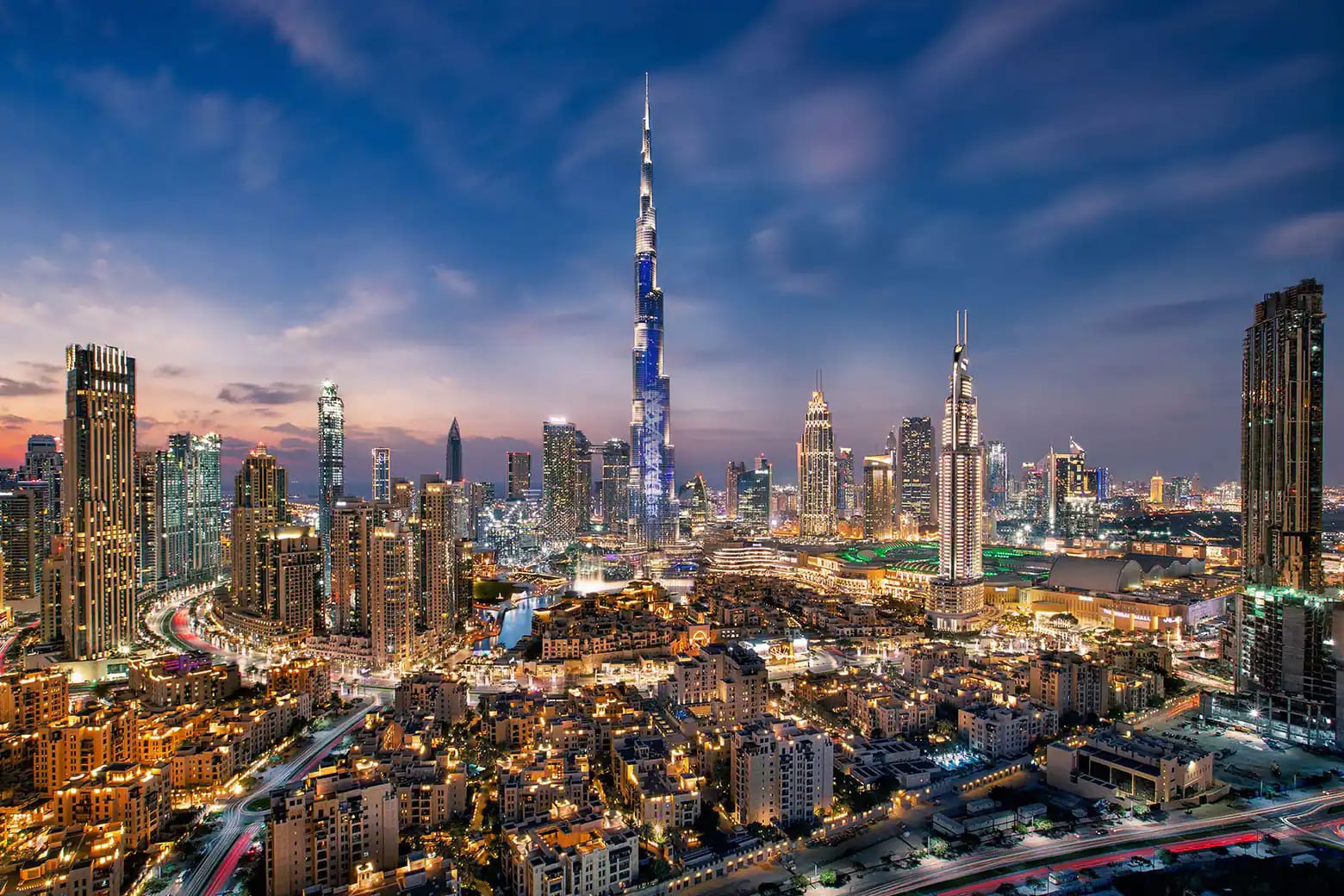
Dubai continues to strengthen its position as one of the world’s leading cities for living and working, according to a recent report by the Deutsche Bank Research Institute. The findings highlight the emirate’s strong performance across several key measures, including safety, quality of life, income, and housing affordability.
According to the Mapping the World’s Prices 2026 report, Dubai ranked among the top 10 cities worldwide for low crime rates. It also performed strongly in the quality-of-life index, placing ahead of major global cities such as London, New York, Paris, and Singapore.
The quality-of-life index is based on several important factors, including purchasing power, safety, healthcare, housing affordability, commute times, pollution levels, and climate conditions.
Dubai Strengthens Its Position in Global Safety Rankings
Dubai’s place among the world’s 10 safest cities reflects the advanced level of security and stability the emirate provides for residents and visitors.
Safety remains one of the most important factors for individuals and families when choosing where to live or work, especially as more people look for cities that combine economic opportunity, reliable services, and a comfortable daily lifestyle.
This ranking also strengthens Dubai’s ability to attract skilled professionals, investors, and international companies seeking a stable business environment supported by modern infrastructure.
Dubai Outperforms Major Global Cities in Quality of Life
The report found that Dubai achieved a stronger quality-of-life ranking than several major international cities, including London, New York, Paris, and Singapore.
This performance is linked to a combination of factors, including high purchasing power, advanced healthcare services, efficient transportation, and a wide range of housing and lifestyle options.
The findings suggest that Dubai’s competitiveness is not based on income alone. It also reflects the balance between living costs, service quality, employment opportunities, and overall convenience.
Highest Average Monthly Net Salary in the Region
Dubai recorded the highest average monthly net salary among the regional cities included in the report, reaching approximately $3,402 per month.
Abu Dhabi followed with an average of $3,334, while Doha recorded $3,190. The average stood at $2,041 in Riyadh, $1,173 in Istanbul, and $220 in Cairo.
These figures highlight the strength of Dubai’s labor market and its ability to offer competitive income levels compared with several cities in the region.
Dubai also continues to attract professionals working in technology, finance, real estate, tourism, and service-based industries.
Dubai Ranks 13th Globally for Housing Affordability
Despite the increase in property prices in recent years, Dubai ranked 13th worldwide in housing affordability. This measure compares real estate prices with local income levels.
The ranking indicates that Dubai’s property market remains competitive compared with many international cities where home prices have increased much faster than household incomes.
According to the report, the average purchase price of an apartment in central Dubai reached approximately $7,244 per square meter. Current prices are now more than double the levels recorded in 2019.
This increase reflects the strong momentum seen in Dubai’s real estate sector in recent years, supported by rising demand from residents and investors, continued residential development, and Dubai’s growing appeal as a destination for long-term living.
Competitive Prices for Smartphones and Cars
Dubai’s competitiveness extends beyond income and housing. The report also showed that prices for several consumer products remain lower than in a number of regional and international markets.
The price of an iPhone 17 Pro with 256GB of storage in Dubai was approximately $1,279, which was lower than the price recorded in Saudi Arabia, Turkey, and Egypt, according to the report.
The price of a new Volkswagen Golf in Dubai was also lower than in several global cities, including London, Paris, Zurich, Geneva, and Amsterdam.
It was also more affordable than in regional cities such as Riyadh, Istanbul, and Cairo.
These comparisons reflect the role of trade policies, market diversity, and competition among suppliers in helping Dubai maintain reasonable prices for a range of imported goods.
Fuel and Everyday Meal Prices Remain Moderate
For everyday goods and services, the price of one liter of gasoline in Dubai stood at approximately $0.80, placing the city 55th out of the 69 cities covered by the report.
By comparison, gasoline cost around $3.88 per liter in Hong Kong, the highest price in the ranking. The price was $1.76 in London and $1.92 in Paris.
The price of a McDonald’s meal in Dubai was approximately $9.50, placing the city 47th globally.
The same meal cost around $15 in Zurich, $14 in Geneva, and nearly $13 in London.
A Balance Between Income, Services, and Living Costs
The report shows that Dubai’s appeal is not based on a single factor. Instead, it comes from a broader balance between safety, employment opportunities, service quality, income levels, housing costs, and consumer prices.
As Dubai continues to invest in infrastructure, transportation, digital services, and healthcare, the city is maintaining its competitive position against major global destinations.
This makes the emirate attractive to professionals seeking career opportunities, families looking for long-term stability, and investors interested in the real estate market.




Leave a Reply